The Redemption of Erâth: Book Three, Chapter 25

Chapter 25: The Coming of Danâr

Talya had the guards unbolt the cell door, and Brandyé found himself being led through a labyrinth of passageways and corridors, past dungeons and kitchens, and always up stairs and steps. Soon he and Talya were passing through a great room—a sort of dining hall, by its appearance—in the center of which rose high the monumental trunk of the Life Tree. Then they were onward, past the great tree and once more among corridors, though lined in wood now, rather than stone.

This palace—for a palace it certainly was—was clearly much larger than Brandyé had expected from the outside, but eventually they stopped before a closed door, and Talya turned to him. “Wait here,” she said softly. “I’ll go in and let him know you’re here.”

Brandyé nodded and stood back, allowing her entrance. She opened the door and slipped through, letting it shut behind her. Brandyé, now alone, looked up and down the corridor, uncertain how long he might have to wait. The torches flickered, casting eerie shadows across the floor.

As he looked, at the far end of the corridor came a sudden swift movement, and through the shadows moved a small figure—a young child—carrying a candle. The girl stopped short, looking down the passageway at him, and in the flickers and shadows he could not quite make out her features. She took a few steps toward him and then stopped again. “Who are ye?” she asked tentatively.

Brandyé made no sudden movements for fear of startling the child, but answered, “My name is Brandyé. What’s yours?”

“I’m Meredith,” she replied. “What’re ye doing here?”

“I’ve come to visit Elven,” he said. “He’s your father, isn’t he?”

“How d’ye know?”

Brandyé smiled gently. “Your father and I are old friends. I knew him before you were born.”

The child, Meredith, moved toward him again, and as she came closer he saw the resemblance in her eyes, in the cut of her chin and the color of her hair: this was undoubtedly Elven’s child. The candle flickered in the air, guttering, but did not go out. “Are ye here to help him?” she asked.

“What do you mean?” Brandyé returned.

“Help him find a cure,” she elaborated. “To the plague. The Sleeping Death.”

“It took your brother, didn’t it,” he said softly.

She nodded. “I miss him. But father is angry—he says the races of power took Farthyn. He says it’s all their fault.”

Slowly, Brandyé kneeled before Meredith, so their eyes might more easily meet. “What do you know of the races of power?” he asked her.

Meredith pursed her lips, and shook her head. “I don’t know. Father says they’re evil.”

In that moment, Brandyé thought he understood Talya’s fear, and Elven’s rage. The Sleeping Death was certainly the doing of the Duithèn, he could sense as much; but to blame all races of power for the death of his son was not only folly, but outright against their own interests. The Illuèn were needed, he knew; the race of men was weakening, and they needed all the allies they could get.

From behind the closed door, he heard raised voices, but could not make out what they were saying. He glanced over his shoulder, and then back to Meredith and her candle. The candle flickered again. “Father shouts a great deal lately,” Meredith said.

“He was always quick to temper,” Brandyé said—as much to himself as to the girl. He straightened and stood up again. “I must speak with him, you know,” he said. “He has to listen to me.”

Meredith shook her head again. “He hasn’t listened to anyone since Farthyn died. He won’t even listen to the queen.”

“We’ll see,” Brandyé said firmly. He could hear the argument escalating through the door, and caught faint tendrils of words:

“… no! I won’t …”

“Please … out there, waiting …”

“… rot, for all I care …”

“You don’t mean that!”

The words died down again for a moment, when all of a sudden, loud and clear, came Elven’s voice: “Get out!” Meredith jumped, startled, and as he looked back to her, he saw the candle go out in a wisp of smoke. The nearest torch was down the hall, and the gloom was heavy.

The door abruptly swung open, and Talya came out, the door slamming shut behind her. Brandyé could see the tears in her eyes. “I tried,” she said. “He won’t listen!”

But Brandyé felt a sudden, overwhelming anger: how dare Elven, once the kindest of souls, dare talk to anyone so—especially one he supposedly loved? “We’ll see about that,” he muttered, and stepped forward, pushing the door open hard.

Inside, he stopped short, taking in the scene. To one side was a bed, unmade and distressed, sheets falling onto the floor. Opposite it was a desk, papers scattered across it, ink stains covering all and splashed onto the floor. And standing before the window, silhouetted against the gray skies outside, stood Elven, his back to the door. “I said, get out!” Elven growled.

“I will not,” Brandyé said emphatically, and Elven turned swiftly, surprise evident on his face.

“What are you doing here?” he demanded. “How dare you—”

“How dare I?” Brandyé interrupted. “How dare I? What about you? You would speak to the mother of your child in such a tone?”

“How I speak to my family is none of your concern,” Elven spat.

“Since when is your family not my concern?” Brandyé said.

Elven’s eyes widened in fury. “Since when? Perhaps since you disappeared into the north, and never returned—nine years ago! Perhaps since you led me on an impossible quest into the wilderness, and then left me to find my own way back? Perhaps, if you recall, since you killed my sister?”

Elven’s words cut deep, but Brandyé was determined not to be deterred. “I had no idea it had been so long,” he argued. “I’ve been places you couldn’t even imagine, met people you wouldn’t believe—and I’ve learned a great deal from it. Where I returned, I thought there would be a chance of redeeming this world—but instead I find you sulking in your palace, doing nothing?”

“You wouldn’t understand a thing I’ve been through in your absence,” Elven retorted. “How many lives I’ve seen wasted—how much death and devastation I’ve witnessed. I didn’t ask to end up where I did—I didn’t ask to rule a kingdom! But what’s happened has happened, and here I am: the power of an entire country at my hand, and powerless for all of it!”

“You’re not powerless,” Brandyé insisted. “I know you—if anyone can find an answer to the Sleeping Death, you can.”

“Don’t speak of things you know nothing about,” Elven said bitterly. “Against a disease of Darkness there can be no prevailing. And when Death and Darkness walk hand-in-hand, and the Illuèn cower in their hovels, then the world is doomed. Everyone is going to die, Brandyé: our time is over.”

Brandyé was stunned. “When did Elven—when did my friend—fall into such thoughts?” he cried. “When did you abandon Light for Dark?”

“I imagine,” growled Elven, “that it was about when my son died. I swore that night that I would have nothing to do with the races of power ever again. And I thought I was holding true to that oath—until you walked back into my life. I didn’t ask for you to return!”

“Elven … it’s me! Just me! What have I to do with the races of power?”

“Are you still friends with the Illuèn?”

“They are our ally—”

“They are no one’s ally!” Elven cried. “And I can trust none who claim to be theirs!”

Realization dawned on Brandyé. “Is this why you refuse to see me?” he asked. “Is this why you hole yourself up in here, away from all those who love you? Because of our ties to the Illuèn?”

“Your ties,” countered Elven. “You, and you alone—don’t dare bring my family into this.”

“Your family hasn’t seen you in months! And what do you have to show for it? What have you achieved, for all your months of solitude?”

Elven had been stepping closer to Brandyé throughout their altercation, and now pressed a finger into Brandyé’s chest. “I’ve done more for this world than you ever have, or ever will, for that matter. I’m not the one who abandoned all those who needed him.”

“Yet that’s exactly what you’re doing now! When was the last time you had a meaningful conversation with Meredith? With your daughter?”

“I forbid you to mention her name! She has nothing to do with you!”

Brandyé grasped Elven’s hand, drew it from his chest, and clasped his fingers in his own. “Elven—you’ve fallen into madness in your grief! Farthyn’s death is a tragedy, yes—but what other tragedies might be prevented, if we work together, as we once did?”

Elven withdrew his hand contemptuously. “So long as you have ties to the Illuèn, I cannot work with you. Renounce your friendship—renounce Elỳn—and I might consider your words.”

“I can’t do that,” Brandyé said sadly. “The Illuèn have suffered more than you know—and they are still willing to help. We need them, Elven—we need their aid.”

“I would not seek their aid should all the world fall into Darkness.”

“That has already happened! Look around you—death, disease and misery is everywhere! And what will happen when the armies of Darkness besiege these cities? Do you think you can defend these people on your own?”

“Do you mean the same armies you fled in terror? Who are you to speak of standing and fighting?”

“I’m your friend, Elven,” Brandyé said. “I want to help.”

“A friend of the Illuèn is no friend of mine,” Elven spat.

And then Brandyé looked deep into his friend’s eyes, and saw the fury and the hate there, and a great sadness fell upon him. “Then my friend is truly gone,” he said softly.

“I’ve gone nowhere,” Elven retorted. “And I’ll still be here—when you’ve given up your so-called races of power, I’ll be here. When they’ve given up on you—when you’re finally abandoned, the way you abandoned everyone else—I’ll be waiting.”

Brandyé nodded sadly. “Until then,” he said, then turned, and walked from the room.

“You can leave my city!” Elven called after him.

As Brandyé stepped once more into the hall outside, he saw Talya and Meredith were still waiting for him—Meredith’s candle still extinguished. “Don’t listen to him,” Talya said as they began to walk together down the dim corridor. “Ye’ll stay right here, in comfort.”

But Brandyé shook his head. “He’s right—it’s his city. If he orders me leave, then leave I shall.”

“Nonsense,” replied Talya. “It isn’t his city, anyway—it’s the queen’s. Gwendolyn—she’ll allow you to stay.”

“I’d like to speak with her,” Brandyé admitted.

“Then I’ll arrange it,” said Talya with a smile. “For now, come and settle. I’ve spare quarters for ye, and ye can rest after your long travels.”

Brandyé was glad of the welcoming of the other inhabitants of the Great Hall, for had they been as bitter as Elven, he thought, he truly would have despaired. As it was, his heart was heavy to see how low his friend had fallen, and the warmth of the room Talya had led him to was small comfort. He fell into the bed almost immediately and slept through until the dark hours, hardly stirring for exhaustion. Yet in his sleep, a thing occurred that had not happened to him for an age: a dream came upon him.

Behind closed eyes, he found himself once more spirited away, far from the Great Hall of Courerà, and it was a moment before he recognized his surroundings: a cold and empty room, bedraggled tapestries the only decoration on the white stone walls, and a single narrow window that looked out onto a gray and dismal sky. He approached the window and peered out, and reeled suddenly from the sight, for he was hundreds of feet above the roofs and towers of a great black city, the wind chill in his tearing eyes.

It was Vira Weitor, he knew, but as he had never seen it before: from such a height, the homes were specks and the people invisible, and the great wall that surrounded the city a handbreadth away. As the great city spanned away from below him, he saw dreadful things: fire and flame sprang from countless buildings, smoke rising black and high in the dark day, only a shade darker than the clouds that hung low above, obscuring any thought of sun. And despite the distance, he could hear the sounds of screams and cries of terror and despair, the dreadful noises of a dying city.

And in the distance, beyond the great wall and the plain that it surrounded, he saw with dread the reason for their suffering: at the foot of the wall and fading into the obscure distance, were hundreds upon hundreds of men and creatures, a sprawling calamity of Dark and vile things, camps and tents and roaring fires dotted throughout: an army of Darkness, a true army. This was no ragged congregation of weary men and beasts, as he had once seen in the Rein, but rather a full siege army at the foot of the city, held back only by the crumbling and destitute wall that would surely not last many more days against their onslaught.

As he watched with dread and his stomach churned, he saw great trebuchets launch flaming missiles high over the wall, cast half a mile or more across the burning plain to fall amidst the homes of the poor, bursting explosions where they landed and filling the air with death. He wondered if the lowest parts of the city, those nearest the wall and their enemy, had been evacuated; he hoped desperately that Tharom Hulòn would have seen their plight and made room for them higher in the city, but he knew he could be certain of no such thing. He looked to the east and the west, and saw nothing but the amassed forces of Darkness, and knew there was from here no escape; with the mountain behind and the enemy in front, the people of Vira Weitor were doomed.

And then, as he looked on, he saw a commotion amongst the folk and beasts of the siege army, and to his astonishment realized he could make out the individual men and creatures in the far distance, as though his very sight were somehow enhanced, and able to perceive the smallest of details from the greatest of distances. Amidst the thronging masses, there was a great war tent erected far from the fighting, and he saw its canvas door flung open, and many guards create a walled passage for whomever was within. The soldiers and beasts nearest this place at once fell silent, turning toward the battle tent and lowering to their knees.

A grotesque and twisted trumpet rang out a bitter note of warning, and then came from the depths of the tent the leader of all these creatures: the lord of Darkness, the king of the fierundé, and the person for whom Brandyé held a bitter hate and a deepest fear. The terror stood high, clad in the darkest of armor, a great sword at his side. From boot to collar he was a portrait of Darkness incarnate, and as Brandyé looked on, he saw in his countenance a fierce and bitter hatred for all that lived in the light.

And as he looked deeper, he was overcome with an awful, sickening recognition, for despite the years that had now passed, he knew this man intimately, knew his villainy and his treachery, and knew that if this man somehow now led the armies of Darkness, there was no hope for any who yet walked in Erâth: it was, impossibly, Danâr, the son of the Lord Garâth of Consolation who had murdered his own father and come to rule his homeland with a brutal and iron fist.

Even as Brandyé reeled with the shock and horror of what was before his eyes, he saw Danâr cast his gaze about him, and come to rest with a fixed stare straight at himself: as though, again in spite of the mile or more that separated them, Danâr knew precisely who and where he was. He saw a grim curl of the lip, a cruel and bitter grin, and then, over the distance and the screams and the roar of battle, heard the voice he had not heard in over a decade:

“So, my old and favorite enemy: here we meet at last. I stand at the foot of your crumbling city, freed from the small-minded oppression of my father, and the grandest army of Erâth at my command. Your people are lost, your allies spent; it is only a matter of time before we take this last bastion of Light and claim it for Darkness.

“But here I come before you, and I say unto you: this need not be the end. No—this is only the beginning. I know you have seen much of this world, Brandyé Dui-Erâth, and I would have you share it with me. I am not so selfish, my enemy—my friend. Join me! Stand by my side, and find the strength you have been missing for all your life. I know you, and know your Darkness: give in to it, and be free!”

Danâr’s speech rang out loud in his ears, even as Brandyé knew no other on the battlefield or in the city had heard him, and he shuddered, for against his very grain he felt a deep and awful truth in his words. He felt his brand grow hot and searing at his breast, and felt a great strength surge through him, and it was no strength of Light. Darkness grew deep around him, and as all light faded from his sight, he fell to the ground, weeping, and knew that he—and all of Erâth—were truly lost forever.

Brandyé was startled from this nightmare by a loud knocking noise, and sat up straight in the bed, sweat streaming from his brow. His heart pounded, and he struggled to catch breath. It was dark, and the candles had spent themselves. Through the walls he could hear the sounds of the people of the great hall going about their evening business, and from outside, the soft patter of rain.

The knocking came again, and this time he knew it as someone rapping at his door. He stumbled from the bed, still fully dressed, and felt his way across the dark room to the door, fumbled for the latch, and opened it partway to glimpse who had come visiting. It was a woman whom he had not yet met, and she peered through the cracked door curiously, a candle in her hand. At a glance he saw that she was very young, and yet carried a weight on her shoulders and a wisdom in her eyes that belied her age.

“I’m sorry to disturb you,” she said. “I had thought you might want some food. May I come in?”

Brandyé stepped back to allow the woman entrance, and she stepped into the dark room, candle in one hand and a basket in the other. Brandyé could smell the scent of yeast wafting from it, and knew she must have brought him fresh-baked bread. The woman put the basket down and bent to relight the candles in the room, and when the dark was somewhat banished she turned back to him, gesturing to the basket. “Please—the bread is still hot, and the pies are fresh this morning.”

Brandyé could not help but recognize his hunger, and took the basket from the floor, placing it on the room’s solitary table and opening it. The bread inside was indeed still steaming, and he tore a piece off with enthusiasm. After a moment he realized that the woman was still standing by, and that he had as yet not said a word to her. He turned, and with a full mouth sputtered, “I’m sorry—I haven’t even introduced myself.” He swallowed his bite, and continued, “I suppose you know who I am as it is—my name is Brandyé.” The woman nodded, but said nothing. For a moment they stood in silence, and then Brandyé spoke again, “You are the queen, aren’t you.”

The woman smiled then. “You must call me Gwendolyn. I apologize for not coming to see you sooner, but I’ve been in many councils today.”

Brandyé waved her concern away, saying, “Please—you must be very busy.”

“I apologize also,” she continued, “for your treatment by our soldiers. You must understand, the laws regarding travel in Kiriün are stricter than ever since the coming of the Sleeping Death. It has claimed so many lives.”

“I truly understand,” Brandyé assured her. “I can’t imagine what it must be like to govern a kingdom so overcome.”

Gwendolyn smiled again, more softly this time. “It takes a toll. But tell me—why are you here? Why did you brave the wilds to venture upon Courerà?”

So Brandyé spoke to her of his journey, his time with Athalya and the Sarâthen, and of his coming down from the mountains into Erârün. “The greatlord is dead,” he told her. “I don’t know if you had learned of that yet.”

She shook her head. “We haven’t had a messenger from Erârün in over a year. I’m saddened; Farathé was never unkind to me.”

“I fear what his successor might do,” Brandyé said. “When we left—when I was banished—the knight Tharom Hulòn had taken control.”

“I remember meeting him, though briefly,” Gwendolyn said. “I have no reckoning of him.”

“His madness may outweigh his reason,” Brandyé cautioned her. “He is madly loyal to his kingdom.”

“As are many,” Gwendolyn mused. Then, she took a step toward him, and grasped his hand in hers. “You are my husband’s dearest friend,” she said abruptly. “Is there anything you can do for him?”

Brandyé had thought she might speak of Elven, and said, “He refuses to speak to me. His grief is blinding him.”

Gwendolyn glanced to the door, as though looking to see if anyone was passing by. “May I confide in you?” she asked tentatively.

Somewhat taken aback, Brandyé nonetheless said, “Of course—what do you wish to say?”

“I’m afraid,” she said softly. “I’m desperately scared for the future of my people. Elven … he saved my life, and then he saved this kingdom. Without him we would still be under the rule of a tyrant, and I would most likely be dead. The people of Kiriün adore him, but he hasn’t been seen for months.”

Brandyé looked into Gwendolyn’s face, and saw deep in her eyes the truth of her words. “But I thought … I understood that you are the true governor of your people,” he said. “What can Elven possibly mean to them?”

Gwendolyn sighed. “I can run as many councils as I like, but I could never be the figurehead of this kingdom. The people will not accept a woman as their ruler. But Elven … he was a sign of change to them, of hope, of good things to come. I need him to be that once more.”

Brandyé found himself struggling to understand what she meant, but nonetheless saw that Elven was important to her, and, so it seemed, to the people of Kiriün. “He wants me to renounce alliance with the Illuèn,” he told her. “He says he will only listen to me if I were to never speak to them again.”

“He sees the Illuèn as cohorts in the death of his son,” she said. “Farthyn was such as bright spark to us all.”

Brandyé lowered his gaze, and released her hands. “I can hardly console him in the death of his kin,” he said. “Has he told you of our past?”

“He has told me enough,” she replied. “And I say now: I need you. I would not order you, for you are not of my kingdom, but I would ask—I would plead—you must bring Elven back to the light.”

And then Brandyé thought he saw a glimmer of purpose here, a thing that he might do that would, finally, be for the good of Erâth. He could rescue his friend, and in doing so restore a beloved figure to the people of Kiriün. He could, from the shadows, bring hope to an entire people.

Yet to do so would mean to cut all ties to the Illuèn, and to Elỳn—his dearest companion in all the world, second only to Elven. The Illuèn had done so much for him, and suffered so much for the good of the world, that it tore at his heart to think of causing Elỳn and her kin yet more grief. And in severing himself from the race of Light, he knew he was opening himself to Darkness: how could he tread a path of righteousness when doing so put at risk all he cared for?

He had never before felt so at odds with himself, and wondered what Reuel would have said. He could almost hear his grandfather voice, reading to him his final words: You alone can choose the path you desire. Yet he now found himself uncertain which path he wanted: that of his heart, which told him to stay with Elỳn, or that of his mind, which knew the truth of Gwendolyn’s words. And he was afraid of the Darkness that lay down either road. But was there another way?

Finally he looked back to Gwendolyn and said with a slow nod, “I will try again. I will speak to him. And I will see what I can do.”

Come the morning, Brandyé found himself invited to a hot breakfast with Gwendolyn, Talya and Meredith, and he discovered that they formed a close-knit family themselves, even in Elven’s absence. For a moment Brandyé allowed himself to be lost in the conversation—Talya speaking of the coming season of cold, and Meredith regaling them with what she had learned in her studies. Even Gwendolyn on occasion would laugh, and he smiled to see her with joy on her face. He sensed that, come the first council of the day, there would be little joy left for her to feel.

The rain continued heavy outside, but the fire in their den was bright and warm, and even after Gwendolyn left them he remained with Talya and Meredith, who had no classes that day. Brandyé amused himself by playing word games with Elven’s daughter while Talya looked on, and he saw that her mother was glad for the girl to have someone new to engage her mind.

Eventually, however, Talya said Meredith had chores to do (she would not allow the Great Hall’s servants to wait upon her, for she would not grow up spoiled, she said), and so Brandyé found himself alone in the den, the fire dwindling and the cold coming in from the outside. He picked up a quill, and for a few minutes idly scratched at the parchment that Meredith had been drawing on.

As he did so, a door opened into the room, and in came Elven, grizzled and disheveled, rubbing his arms against the cold. Brandyé was concealed in a corner of the room, and as such Elven did not appear to notice him as he tossed another log on the fire, and took an absent-minded bite of bread that had been left out. Elven then picked up a slice of ham that had also been left, strode to the window, and flung it open.

Before Brandyé could wonder what his friend was about to do, there was a great flutter of wings and Sonora dropped from the sky, settling on the windowsill and shaking the raindrops from her feathers. Elven extended the ham out toward her, and she gladly took it in her beak and began to gnaw at it. Elven reached out to pet the bird’s head, but suddenly Sonora stiffened, and Brandyé saw her glance at him, startled.

Elven, equally startled, followed the bird’s gaze, and his face set grim when his eyes fell upon Brandyé in the corner. For a long moment neither of them spoke, and Brandyé thought perhaps Elven would simply leave the room. To his surprise, Elven moved toward him, and took a seat at the table opposite him. He did not meet Brandyé’s gaze, but said with head down, “I come here to feed her in the morning. She’ll take food from no one else.”

“I’m glad that she’s still well after all these years,” Brandyé said. “She’s had a long life.”

“She’s had a hard life,” Elven muttered.

For another long moment there was silence, before Brandyé forced out the words: “Elven … about last night—”

“I don’t wish to speak of it,” Elven interrupted him.

Brandyé took a deep breath. “I must,” he persisted. “I spoke with Gwendolyn, and she told me about your position here in Kiriün.” He looked intently at Elven, but there was no reaction to his words: Elven’s head remained down. “She told me you matter here; that you mean something to the people of this country. At first I was surprised, but as I’ve thought about it, I can think of no other. You belong here, Elven.”

“I never asked for this,” Elven said. “I didn’t ask to become a king—a figurehead.”

“But Elven, don’t you see? You’re perfect for it. You’re strong, you’re kind, people like you … the people of Kiriün need such a person in these times. They need hope.”

“How can I give them hope, when the Sleeping Death is taking members of my own family?”

“Don’t let Farthyn’s death be in vain! Show the people you are just as susceptible as them, and yet you remain strong. Don’t let his death be yours, also.”

But Elven shook his head. “I feel dead, every day.”

“But you aren’t,” Brandyé insisted. “You’re well, and very much alive. You’ve suffered more in this world than any I know, and see what you’ve become! Doesn’t that show you that there is some good in this world, some force of Light?”

“Don’t speak to me of Light, or Dark, or any other race of power!” Elven spat. “I swore I would have nothing to do with those vile people, and I stand by that.”

“I won’t change your mind,” Brandyé said softly, “but I must help you. Am I not your friend still, after all these years?”

Finally, Elven looked up and into Brandyé’s face, and he could see the tears in his red eyes. “If you truly value our friendship, then you will send word to the Illuèn that they are no longer wanted in Erâth—that you will have nothing to do with them.”

Brandyé swallowed, and he felt a faintness as he said, “Very well—if it is to preserve our friendship—and to regain the trust of the people of Kiriün—I’ll do it.”

Elven looked shocked. “You … what?”

Brandyé nodded. “I will write a letter to Elỳn, and I will tell her not to contact me again.”

“You would do that?”

“I’ll do it right now, if you wish,” Brandyé said.

Elven stared at Brandyé for a long, long minute. Finally he said, “Then do it.” He picked up the quill, and passed it to Brandyé. Brandyé took it, trying to hide the tremble in his fingers.

“What should I say?” he asked nervously.

“Tell her … say that you appreciate the help she and her kind have offered thus far,” Elven began, “but that it must come to an end. Tell her that the world of Erâth has suffered enough under the greater powers of Light and Dark, and that it will no longer.”

Brandyé scratched out Elven’s words as he spoke, ink splattering on the page as he did. “What else?” he asked.

“Tell her that she must never try to contact you again, nor ever enter into the lands of Kiriün. You will never see her again, and you will never communicate with her again, either. Tell her that this is the last she will hear of Brandyé Dui-Erâth.” Brandyé continued to write. “Let her know that the people of Erâth will suffer no longer.” Elven looked down to Brandyé, watching as he penned the words. “You may tell her that you will miss her, if you wish,” he finished.

Brandyé continued writing for a moment, and when he was finished, set down the quill and sat back. “There,” he said. “I’ve done it. Would you like to read it?”

Elven nodded and took the note, reading it slowly. As he did, Brandyé watched his expression, and sadness clawed at him, for his friend seemed all the happier for it. But then Elven shook his head. “This is good, but it isn’t done yet—she must receive it.”

“How?” Brandyé asked. “No messenger of Kiriün could find the Illuèn.”

Elven looked to the window, where Sonora had settled to rest. “Sonora will deliver it.”

“It’s a long journey,” Brandyé cautioned.

“She can do it,” Elven insisted. “She knows the way.”

Brandyé let out a sigh. “Then let it be done.”

“Seal the note,” Elven said. “I’ll wake Sonora.”

As Elven rose from the table and walked across the room to the falcon, Brandyé rolled the note tightly into a small scroll. Then, just before he wrapped twine around it to bind it, he slipped a second scroll inside it. He tied both tight, and when Elven returned, handed them both to him, trying to ignore the sweat of his palms.

Elven seemed none the wiser, however, and secured the scroll to Sonora’s leg. “Go,” he bade the bird. “Fly swift, and return with no answer.” Brandyé winced to hear his friend speak so, but the falcon let out a soft cry and hopped toward the open window. “She’ll return in only a few days,” Elven said confidently. Brandyé watched as Sonora took flight, and once she was gone Elven shut the window. He turned to Brandyé. “Thank you,” he said. “This … this means a great deal to me. I’m glad to have you as my friend.”

“I’m glad, also,” Brandyé returned, and the words were bitter on his tongue. He knew what he had done, and hoped fervently that it was for the best.

“Come,” said Elven, “let’s have some tea. Then we can discuss what we should do next.”

But at that moment, the door was flung open, and Gwendolyn burst in, breathless. “Elven!” she exclaimed. “I’ve been looking for you everywhere! We’ve had dreadful news, and I must tell you!”

Surprised, Elven turned to her and said, “What? Gwen, what’s wrong?”

Brandyé saw that a man had followed her into the room—a messenger of sorts, from the look of him. The man was equally out of breath, and Brandyé supposed he must have been running to keep up with the queen.

“We’ve been attacked,” she said. “In the southeast, villages in the Outlands.”

Elven’s face grew grim, but Brandyé paled. “What happened?”

Gwendolyn turned to the messenger, who spoke, “Your majesty. I apologize for the intrusion—”

Elven waved him on. “Never mind formalities—spit it out!”

“I’ve just come from Freeling in the Hösland,” the messenger said, “which has been overwhelmed by folk fleeing the Outlands. They tell of soldiers coming upon them in the night, burning their homes and killing any who resist them.”

Elven shook his head in disbelief. “Why would Erârün do this? Has Farathé lost his mind?”

Brandyé did not even think to remind Elven that Farathé was dead, for he was in shock himself. He had a sense of dread, a feeling of awful, impending doom, that this was no incursion by their neighboring kingdom. He hoped that the messenger would prove him wrong, but to no avail.

“They don’t think it was of Erârün,” Gwendolyn said.

The messenger nodded. “The folk were very confused, sir, naturally, but their descriptions—they don’t speak of soldiers or knights in dragonstone.”

“What … what color was their garb?” Brandyé asked, almost stuttering.

Elven looked to him as though he were crazy. “What does that matter—”

“What color were they?” Brandyé interrupted.

The messenger looked between Elven and Brandyé, uncertain who to answer. Elven nodded finally, and the messenger said, “They claim the soldiers bore banners of a bright blue—a color they had never seen before.”

Gwendolyn looked desperately to Elven, then to Brandyé, and back to Elven. “What?” she asked. “What does this mean?”

Elven shook his head. “Nothing. It can’t be—it makes no sense.”

But Brandyé stood slowly, and in a low voice said, “It is, Elven—you know it. It’s finally happened. He’s outgrown that place, and now he’s come for us.”

“Who?” cried Gwendolyn. “Who has come?”

Brandyé looked fiercely at his friend, and then pierced the queen with a desolate stare.

“Danâr.”
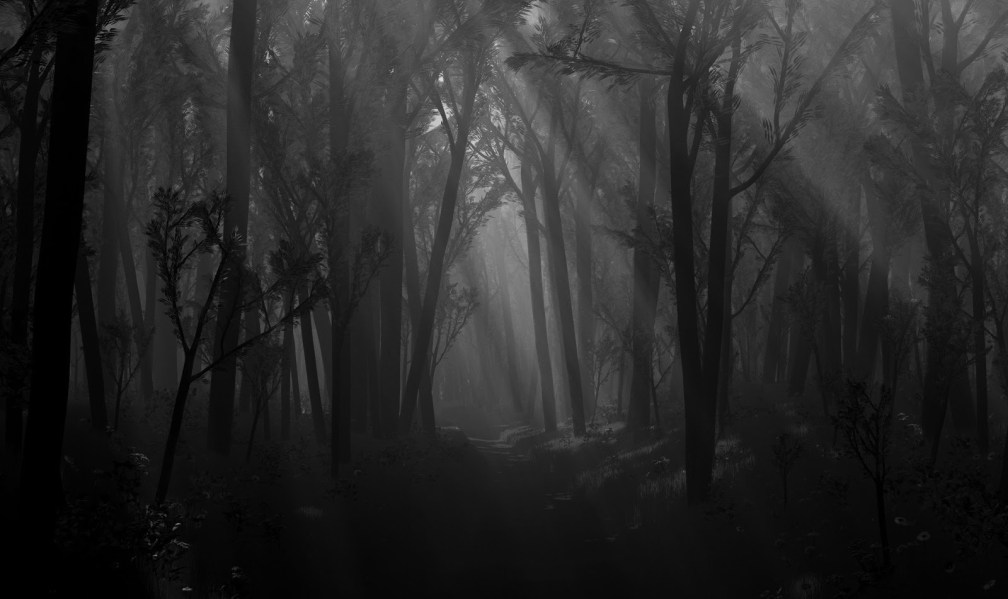
The Redemption of Erâth: Book Three, Chapter Twenty-Four

Chapter Twenty-Four: Old Friends

As he had hoped, the Dotterys invited Brandyé to pass the winter with them, for the cold weather was soon upon them and he would not have traveled through the Trestaé in the snow by choice. As the frost and snow came down, he helped seal the home against the cold (a yearly task, according to Timothaï), and with the fire roaring in the hearth even the outside gloom did not affect Brandyé’s mood, for it was always warm and comfortable. The Dotterys had built a shelter beside the home to keep dry their firewood, and having stocked it well through the summer it was an easy job to keep the fire and stove burning through the day and night.

When he was not helping Timothaï hunt or Maria and Julia clear paths through the snow, Brandyé would often play with Kyrie, whose childish joy in the simplest of things was infectious to him. She loved to be outdoors, even in the snow, and he would take her for walks in the woods where they would spy for birds and squirrels, shake pine cones from the trees, or make shapes in the snow by lying down and waving their arms and legs about. She particularly enjoyed this last, and would spend hours at it, until Brandyé could but watch in amusement and the sky grew dark.

Despite the safety he felt among old friends, he had not forgotten the fierund that had come upon him not far from here, and so he carried with him at all times his crossbow and Fahnat-om, though he of course never allowed Kyrie to touch them. She was idly fascinated by his weapons, for the Dotterys had no such things, and caught their meat in traps set out in the woods. He told her they were strictly for defense, should bad things come upon them, and she seemed to understand this well, for she never asked to hold them. She latched on to the idea of ‘bad things’, however, and he felt a slight guilt at introducing the Darkness of the world to one so young. “Are there bad things in the woods?” she would ask him, and he was often uncertain how to answer.

“I once saw things here that would hurt you, if they could,” he replied cautiously, for he did not want to frighten the young girl, “but I haven’t seen any for a long time.”

“Are plants bad?” she asked.

“No,” he said with a chuckle, “although there are some that hurt if you touch them. Those are not the bad things.”

“Is it the animals?”

“Most would never harm you,” he told her, “but there are some that might.”

“Granddad kills rabbits,” she said. “Are they bad?”

“No,” he replied with a smile. “Granddad kills rabbits to eat, but only enough to feed you all. Rabbits are not bad.”

“A rabbit bit my finger once,” she said.

“The animals I mean would kill you, the way granddad kills the rabbits.”

Her eyes grew wide at this. “You mean to eat me?”

He nodded. “A wolf, for example, might kill you to eat you. So might a bear. But those animals are not ‘bad’—they only want to live, like you and me.”

He enjoyed talking to her, for her insight into the world was innocent and refreshing—despite the dark nature of this particular conversation. He watched her for a moment as she mulled this thought over. “Then the bad animals want to hurt me, but not to eat me,” she said slowly. She looked up at him. “Why do they want to hurt me?”

“Because they are mean,” he said. “They are the bad animals.”

For a while then they walked in silence. They were returning from a visit to Ermèn, and it was growing dark, though he was certain they would arrive at the Dotterys’ home before it was night. Finally, she looked to him again and asked, “Are there bad people?”

Taken aback by the question, Brandyé was uncertain how to answer at first. “There are,” he said carefully. “Why do you ask?”

“Mommy and auntie were talking about a bad man once,” she said. “They said they never want to see him again.”

A chill, deeper than the winter cold, went through Brandyé. “Did they say this bad man’s name?”

She shook her head. “I don’t remember. I think he’s far away.”

Brandyé felt a small relief, for he had for just a moment wondered if they had been talking of him. Despite the time that had passed, he could not forget the harm he had once done to this family. Later that night, when Kyrie was asleep, he sat by the fire with Timothaï and spoke to him. “Kyrie is a bright little child,” he said.

Timothaï nodded. “She is a delight, indeed. I think that without her, Maria would be destroyed. Erik’s passing was difficult for all of us, of course, but for her especially to lose not only her husband but the father of her child. She reminds her of him daily.”

“She’s a wonderful talker.”

“She speaks very highly of you. She calls you uncle Brandyé.”

Brandyé looked deep into the fire for a moment. “She asked about bad people today. She said she heard Maria and Julia talking about a ‘bad man’ once.”

Timothaï sighed. “I suspect they were talking of Danâr. We try not to think of the past, but sometimes things happen that remind us. I often wonder of the fate of Consolation.”

“As do I,” Brandyé acknowledged. “Tell me—you’ve never been visited here by any other, have you? No one other than Ermèn has ever been here before?”

Timothaï shook his head. “No—we are very much alone.”

Brandyé stroked his chin. “Do you ever wonder what Kyrie will think of the wider world, if she is ever introduced to it? Is it good for her to grow up in such isolation?”

“It’s a difficult choice,” Timothaï said, “especially for Maria, now that Erik is gone. No—I don’t think it’s good for her. But what else do we do? Return to Burrowdown? Who knows if Danâr still rules, and if so I would not go there for anything. Move the whole family to Courerà, to live with Elven? In a kingdom of disease and death? What would you do, Brandyé?”

Brandyé realized he had no answer, for it was a difficult choice indeed—and given the possibilities, remaining safe in the Trestaé was not the worst. Yet for him, he knew he had no choice: when the winter was over, he must seek out his friend.

The winter, however, did not seem to abate for some time, and as the days grew short and dark, he tried to forget the Darkness, and the gloom, and focus on the family here that, for all that had happened to them, seemed nonetheless happy. For all the days that snowed and froze, he did not see or sense any sign of fierundé, or any other Dark creature, and was relieved. He wondered what the Dotterys had done to avoid such danger, and find such peace in the middle of the Trestaé—though he did not deliberate too greatly on the matter, almost as though by doing so he might dispel their good fortune and bring a pack of fierundé upon them at once.

Of course, the darkest days could not last forever, and eventually the snow stopped falling, the air warmed, and the frost on the earth lifted. Though the sky remained ever clouded (Brandyé had nearly forgotten the sun from his time in Viura Râ already), he could sense spring was nonetheless upon them, and when the first buds appeared on the trees and bluebells were among the bushes, he knew he had lingered with the Dotterys long enough. The time to leave had come, and so he began to prepare for the long journey ahead.

Kiriün lay, he knew, to the west of Erârün, and the two kingdoms were separated by a great wall that spanned hundreds of miles. Yet he knew the wall could not run forever, and by his reckoning he ought to be able to slip past it to the south if he kept a course due west through the Trestaé. As best as he could recollect his grandfather’s maps from his youth, this would eventually lead him past a great river, and into what had been to his grandfather unknown lands—the southern fields of Kiriün. He could only hope to encounter a village or town there that could lead him to the capital city of Courerà.

He packed a great pack with blankets and food, and Timothaï gave to him a small hatchet, that he might be able to cut firewood when he needed it. Arian provided him with a small flask of medicine that Elven had taught her to make, and Ermèn, who had come to the Dotterys’ home to bid him farewell, gave to him a somewhat larger bottle of brandy, that he might keep warm in the rain.

Kyrie was sad to see him go, and hugged him greatly as he stepped from the front door, saying, “You won’t go for long, will you?”

Brandyé could but smile and return her hug. “I don’t know, dear,” he replied. “I have to see your uncle, and he lives far from here.”

“Be safe!” she said. “Don’t let the bad animals eat you.”

“I won’t,” he reassured her, and when she finally released him he turned to leave. Just as he did, a cry came from the clouds above, and even as Brandyé recognized it Kyrie shouted with joy.

“It’s Sonory, it’s Sonory!”

As Brandyé looked up to the sky, he saw a heartwarmingly familiar sight: a great falcon, circling ever lower, and coming to rest on the needled ground only a few feet away. Sonora the falcon hopped toward him, and as he kneeled to rest his hand against her head he saw the note tied to her leg. “It’s so wonderful to see you,” he murmured gently, and the bird cawed in response, a gentle and comforting sound. “Is this note for Elven’s family?”

He reached to untie the note, but did not unwind the scroll—it was not for him, he knew, and thus not his place to read it. He laid his pack on the ground and returned to the home, the note in his hand. “An interesting coincidence,” he said as Timothaï looked up in surprise; “it seems just as I leave, Elven’s sent you word.”

Timothaï took the note and unwound it, beginning to read. As he did, Brandyé watched uneasily as he saw Timothaï’s face fall, and shock steal across his features. “What’s happened?” Brandyé asked, concerned. “Is Elven all right?”

For a moment, Timothaï said nothing, but merely stared at the paper. Finally, he closed his eyes, and handed the note to Brandyé. “Ill news, I’m afraid. Not for him, but … well, read the note.”

Frightened at what the note might say, Brandyé tentatively took it, and as he read, his own reaction mirrored Timothaï’s:

Dear family,

It is with the deepest despair that I must bring you word of yet another passing in our family: that of my son, Farthyn. At only three years of age, Death have seen fit to take him from Talya and myself, and for this I can never forgive them. I curse them, and all the races of power.

Farthyn died this past summer of the Sleeping Death, and Talya and I have been deep in grieving ever since. Meredith has borne his passing better than all of us, and she is a light in these dark times. Courerà continues to fall into sickness and decay, and I am beginning to fear that nothing will bring us back from the brink. Death and Darkness are coming for us all.

I send my best wishes to all of you, and I hope that you will live out your days in peace in the forests of the Trestaé. If I ever can return to you, I swear one day I will: but duty now binds me to this kingdom, whether I wish it or not.

With deepest love,

Elven

“I’m so sorry,” Brandyé uttered.

“What is it?” asked Arian as she approached them, voice full of worry.

“Elven’s son is dead,” Timothaï said softly, “of the sickness that lies over his land. Some time ago—it seems he could only bear to tell us now.”

Arian clasped a hand to her breast. “Farthyn?”

Timothaï nodded grimly.

“We never even met him …” she muttered, and took to a nearby chair.

“What … what can I do?” Brandyé faltered. “I don’t feel that I can leave now—not on this eve of death.”

But Timothaï took in a deep breath, and lay a hand on Brandyé’s shoulder. “No—there is nothing you can do for us here. Better you make your way to him: he needs you now, more than ever. Go and bring him some peace.”

So Brandyé’s journey from the Dotterys’ home started not in hopefulness, but in somber and grim despair, and thoughts of Darkness and Death were heavy in Brandyé’s head for quite some time thereafter. As he made his way slowly through the hills and forests of the Trestaé, the sky seemed darker than ever, and the rain colder than ever, and he was glad of Ermèn’s brandy when he could not light a fire. As much death as he had seen in his life, he thought, Elven had suffered immeasurably worse, and he found he could not fathom the thought of losing a child. Guilt began once more to gnaw at his heart, and he began to wonder if somehow, despite his utter absence for so many years, this latest tragedy in the Dottery family was somehow of his doing as well. He began to question the wisdom of journeying to see Elven—what if he brought only further despair upon his friend?

But he knew that he could not stay forever with the Dotterys, and with his banishment from Erârün he knew not where else he could go. So he plodded grimly on, day upon day and week after week, through endless swamps and bogs, until there came a day when the hills and valleys faded into the distance, and the dense forests were left behind, and he was making his way through fields of tall grasses and heather, and the plains stretched out as far as the eye could see.

Here the going was easier, though he grew himself uneasy: there was precious little cover here, and though this meant he would see an enemy easily from a great distance, there was equally nowhere to hide from such an enemy should he ever see one. There were no trees except every here and there, dead and leafless every one, but he made his way from one to another, resting beneath their bare branches each time, for it was the only place he could make fire, short of burning the dry grasses that sprouted throughout the fields.

As he progressed, he began to feel a heavy weight on his heart, a sense of impending Darkness that was drawing ever nearer, and he would look frequently over his shoulder, or stop and look in every direction, searching for the red eyes he now felt certain were pursuing him. He walked for hours at a time with his crossbow in hand, or resting his palm on Fahnat-om, but for day after day there was no visible threat, nor any howl in the distance. If his enemy was following him, they were doing so silently.

So the days and weeks passed, and the land slowly changed around him, and he hunted when he needed food and stopped when he needed rest, and for all that time he was utterly alone. Here, it seemed, was a great barren part of Thaeìn outside of the borders of either Erârün or Kiriün, where it seemed no person dwelled, nor had dwelled for many thousands of years. Forests gave way to fields, which gave way to heathered moorland, and then one day he crested a low hill to look down upon an immense river, perhaps half a mile wide and running deep through the plain. It ran dark under the gray skies, and as Brandyé approached its edge he realized he had no way of crossing it—the waters were deep, and there was no bridge or ford to be seen.

This gave rise to concern, for whilst he had known this river would bar his path at some point, he had not reckoned on its breadth, nor on how he might cross it. So used to the streams and trickles of the Trestaé had he become that he had forgotten that greater rivers ran through the lands of Thaeìn. He looked up and down the flow of water, and considered his options. He could follow the river downstream, of course, to where it presumably met the sea. Here, perhaps, it might become shallower and more easily forded, but it might take him far out of his way. He could follow it upstream, but this might take him deeper into the territory of Erârün, where he might be captured.

He unslung the pack from his shoulder and settled under a tree by the river, contemplating his choice. He ate a bite of dried meat, and refilled his gourd from the river, whose waters were clear and cold. He could also try to swim the river here, he thought, though he doubted his ability to swim with his pack across the entire breadth, and was worried he would ruin what was left of his provisions.

Then, as he paced before the river with these thoughts in mind, a slow sense of dread came upon him—subtle, at first, like the first shadow of night stealing over the hills. He became aware of a deathly silence around him, such that not even the great river seemed to make a sound, and he gradually slowed his pacing and came to a standstill. He looked to the sky, and to the plains behind him, and there was a faint waving in the tall grass, as of wind, or of some creature sneaking toward him. He laid a hand on Fahnat-om and grasped his pack, readying to flee—though he knew not where he might go.

The grass rippled once more, and then he heard a faint sound in the distance: a soft growl, a snarl—a baring of fangs. He felt a warmth at his breast, and suddenly the field before him erupted in movement, and as a searing pain overcame him and brought him to his knees, the fierund leapt clear and let loose a terrible howl, resounding in Brandyé’s ears and into the distance. His enemy had found him.

Staggering again to his feet, he swept Fahnat-om from its sheath and swung it blindly at the beast, cleaving nothing but air yet keeping the great wolf at bay. Breath ragged, he clasped the sword in both hands, staring the fierund down, unable to look from its glowing red eyes. The beast took a step toward him, snapping its jaws in anticipation. Brandyé jabbed the sword toward it, but the threat passed it by, and it reared its haunches to leap upon him. He dove behind the tree, falling helplessly to the ground as the terrifying jaws clenched shut behind him. The fierund twisted as it leapt, pawing heavily at the tree and nearly uprooting it in the process. Brandyé rolled in a panic to the side as the dead tree tottered and fell, nearly crushing him. He heard the fierund howl again, and then, as though his fate was not already sealed, two more howls answered from the distance.

Abandoning his pack, he brought himself once last time to his feet, turning to face his doom. The fierund had recovered from its bound and and turned to face him once again, a fierce and furious snarl on its countenance. Dimly in the back of his mind, Brandyé recalled a phrase, spoken many years ago: Do the fierundé swim? He realized he had no answer to this question, but saw no other escape: in a single swift motion, even as the fierund leapt again at him, he threw himself bodily into the river.

The water soaked through his cloak in an instant, ice against his skin, and he fought for breath as his lungs threatened to fail him entirely. But just as swiftly the current caught him, and he was borne away from the fallen tree and the fierund, left standing furiously, snarling after him. The fierund approached the water cautiously, pawed at it briefly, and then retreated, a howl escaping its throat. Moments later its companions appeared, but not one of them leapt into the water after him.

Thrashing desperately, Brandyé fought against the current and the weight of his cloak, eddies swirling around him and threatening to drag him under. As he was swept away from the shore the current picked up its pace, and he gasped for air against the cold that was crushing his chest. Yet even against the river’s icy grip he felt the burning of the brand on his chest, and it gave to him a strength that he would otherwise have not known. Pulling at the water he moved, stroke by stroke, into the deepest currents, and then beyond and onto the far bank. As he approached he saw the boulders and branches sweeping by, and in a last effort he allowed himself to be cast against a great stone, and there he remained, breath ragged, as the water continued to flow around him.

After a great time, he felt the cold begin to leave him, though only slightly, and he gradually picked himself up and squelched up the bank, pausing for breath under the barren branches of a dead oak. He was soaking and frigid, and though he was still frightened of pursuit from the fierundé, he knew he would get no further until he allowed himself to dry. He stripped himself of the drenched cloak and clothes, flinging what he could over the tree’s lowest branches, and swiftly set a great fire going.

Soon he was no longer shivering, and sat with his back to the flames until his tunic and breeches were, while still damp, warm and dry enough to wear. By this time night was coming on, and so he resigned himself to waiting out the night by the fire, and hoping he was not set upon in the dark. So he spent a dismal night, hungry and wet, though tending to the fire at the very least gave to him some degree of warmth.

Come the morning he was yet unassailed, and he came to the conclusion that these fierundé, at least, had no love of water, and had abandoned their pursuit at the river’s edge. Staring across the continuous stream he could see no sign of them, and wondered if they had, as he had planned to, followed the river downstream to a place where they might more easily ford the waters.

He set out at first light, wrapping his cloak tight around him, marching onward and carrying forward into the west. It did not escape him that both Fahnat-om and his crossbow had survived the crossing of the river, and he was weighted down with the knowledge that he would never be rid of this weapon of death.

Yet after some hours of walking he was warm once again, and as the rain held off he made quite some progress that day, and the days that followed. Having now crossed the great river the land took a turn for the worse, becoming increasingly barren. Soon there were no trees to be found, and he struggled each night to light a fire of the dried heather and sparse grasses that grew here. The land began to rise, and he found himself passing through empty, barren moorland when he one day came upon a sight that took his breath away.

Before his feet stretched an abyssal canyon, a churning river rushing through its depths. Spanning this canyon was a white stone bridge, decaying but still intact, and across it stood the remains of an ancient city, carved out of the limestone cliffs that stood before the sea—black as ink, the same that he had once spent a year on the shores of, abandoned and lost. Great towers and spires reached high above the dark waters, yet every one a ruin, crumbling and heavy with despair. This was a city of ghosts, he felt, and Darkness weighed heavily upon him. He took a first tentative step onto the bridge, and then another, afraid it might collapse beneath him.

But despite its age, it bore his weight well, and once across it he started down an overgrown cobblestone street, and into the depths of the town. As he did, the first few drops of rain began, and before long he was caught in a downpour, the stone soon wet and his cloak drenched, rivulets running down the sides of the streets. He ducked into an open doorway, out of the rain, and slid to a rest against the cold stone wall. He would not get much rest here, he thought; it was an unsettling place, and he was afraid what creatures might be stalking the empty and forgotten streets. He had no sense of fierundé, but with the black sea on the horizon and night coming on, Darkness crept through the shadows, and he was uneasy through the lightless hours until dawn.

As he waited for the night to pass and could not sleep, his mind drifted to the coming days, and how he might find his way to Elven. He thought he had a sense of where he was now; past the great river, he was well into the west of Thaeìn, most likely near the southern borders of Kiriün. This town, in fact, might once have been a grand port of the kingdom, before the great War of Darkness and the settling of the world into Darkness. He imagined the city, similar to the island towns of the Cosari, bustling with folk and rich with the scent of baking and spices, and a bitter sadness came to his heart at the thought that the place had been brought so low over so many years. Like the ruins of Viura Râ, he realized there must have finally been a last resident of the city, a solitary soul who would have been driven mad by the solitude and isolation. Then he recalled Abbey and the desolation of Wutherford in the north of Erârün, and a dark realization came to him: Life in Erâth was slowly being extinguished. So it had been for thousands of years, and now, with the Sleeping Death encroaching upon the last kingdoms of the world, it was nearly done.

So his resolve to find Elven redoubled, for he would not allow the world to die so easily. He now understood better the roles of the Duithèn and the Namirèn in the fate of the world, and knew that Death was not ultimately responsible here, but Darkness: they were indeed growing stronger, bolder, and more resilient against the remaining strongholds of men. Even if a cure was found for the Sleeping Death, the armies of Darkness would no doubt be upon them shortly—a matter of weeks, or months, perhaps, before the sieges began against Vira Weitor and Courerà. What hope was there left for the world of men? Little enough, he supposed—but if Elven could become king, then anything was possible; and so far, the forces of Darkness were leaderless.

These thoughts remained with him through the night, and come the dismal gray of dawn he left that place, turning his back on the black sea and making his way through the wet streets and once more into the plains that ran onward to the north. Here, however, he found a path, stretched straight before him, great flagstones laid into the earth and nestled so tight against one another that in all the centuries that had passed since it had last been tended, hardly a blade of grass had grown between them. This gave him some hope, for it seemed likely that, should this town have once been a part of Kiriün, this road would lead him to their capital city.

As days continued the rains came and went, the sky remained ever gray, and eventually the stone road gave way to gravel, and then to grassland, and he could but continue along the path that was now behind him. Eventually even the grasses faded, leaving barren earth and dead trees surrounding him. A bitter weed was all he could find, and he realized that, without food or shelter, he might not pass through this land alive. There were no longer animals to hunt, nor caves in which to hide from the rain, and day after day went by without food, without water, and without respite.

But just as his despair was at its peak, and hunger threatened to consume him entirely, he came upon a break from the monotony of the wastelands: a small settlement, a patch of houses, and to his indescribable relief there were folk there, alive, if not strictly well. Like so much he had seen in his journey so far, the place was in ruins, but three families remained, and they tended what little land they could, raising gaunt and malnourished pigs on the weeds that were so plentiful. Brandyé spoke to them, and they brought him into their home and fed him what they could, and he slept soundly for the first time in months.

Come the morning he was awoken by the sound of a rooster crowing, and he asked the people if he was on the right path to Courerà.

“What d’you want to go there for?” they asked him, scratching their heads. “Ain’t nought but death that way.”

But Brandyé insisted, and so they set him in the right direction, with a fresh pack and some salted pork, bidding him farewell and the best of luck: “You’ll likely need it, if you’re headed to the city: the Sleeping Death lies that way.”

“I’ve passed through that Death and lived,” Brandyé told them. “It isn’t for myself that I’m afraid.”

It was less than ten days to what the farmers called the Lichae—the inner circle of Kiriün, and a place where the barren wastelands were no more—and this finally brought a touch of hope to Brandyé’s heart: after so long and so much strife, it seemed he was nearing his journey’s end. Soon he would be in the welcome company of his oldest friend, and together, he was certain, they would find a way from the Darkness that was threatening to consume them all.

But as those final days passed and the land around him grew greener, the folk he met were ever less welcoming. At first it was merely the suspicion of an outsider, but soon the villages he encountered would not even let him pass, and he became aware that here, the Sleeping Death was all too real: there were many who had succumbed, and many more who were ill or in fear of exposure. He found himself sneaking around the outskirts of the villages, and he noticed that soldiers and guards were increasingly prevalent, and he wondered at their presence. Surely Elven did not have a martial law in place, he thought.

And then, on the eighth day since the Outland farmers and well into what he had come to learn was called the Hösland, his journey came to an abrupt halt. As he was rejoining the road that led from a town that he had passed by, he saw in the distance a troupe of soldiers, riding toward him at speed. Wary, he stepped off the road and took shelter behind a large boulder, waiting for the soldiers to pass him by. But as they grew nearer he heard the clap of hooves come to a halt, and a voice called out, “Stranger—show yourself!”

With a sigh and a sense of dread, Brandyé knew they spoke to him, and stepped out from behind the boulder. There before him were no less than five soldiers on horseback, spears lowering as they moved to surround him. Wary lest they spy his sword or bow, Brandyé slowly raised his hands above his head, and waited for their words.

“Who are you?” the soldier before him spoke.

“My name is Brandyé.”

“Are you a healer?” the soldier asked gruffly.

Uncertain what difference this would make, Brandyé thought truth would serve him best. “No, though I know one.”

“What allowance do you have, then, to travel this road?”

Brandyé frowned, uncertain. “None, I suppose—I have come from the south—”

“Have you papers?” the soldier interrupted.

Brandyé shook his head. “I do not.”

The soldier then dismounted, swinging his leg over the horse, and Brandyé wondered what was coming until he removed a pair of shackles from his riding pack. He brought these to Brandyé, and standing before him, said, “Then you are under arrest. Resist and you will be killed.”

With a sigh, Brandyé held out his hands: there was no point in fighting this. “May I ask my crime?” he asked as his wrists were bound.

“None may travel, save by leave of the king,” the soldier replied. “The Sleeping Death is upon us, and its spread must be contained.”

In a way, Brandyé was almost relieved to hear this. “I think,” he said, “that the king would gladly grant me passage, if he were to learn of my presence here.”

But the soldier appeared unfazed by this. “My riders will return you to Courerà, and you’ll find yourself tried like any other. The law is the law.”

“I’ll go with you gladly,” Brandyé replied, “if you’ll do me but one favor: send word to the king, and tell him Brandyé is here.”

“You’re hardly in a position to make demands,” the soldier said roughly.

“I can promise you,” Brandyé said, “that if you don’t, and the king later learns of my imprisonment, you will regret it.”

The soldier eyed him keenly for a moment, and Brandyé kept his face passive: he knew his fate here depended on the soldier believing his every word. Finally, the soldier nodded to his companion: “We’ll do him this one favor—once he is safely in the dungeons, you can notify his lordship. It’ll be in his hands, then.”

So Brandyé allowed himself to be led away, and they took from him Fahnat-om and the crossbow, and kept him on a rope that was made fast to the soldier’s saddle. For all their precautions, however, Brandyé did not resist or struggle, for he knew that once Elven learned of his imprisonment, he would be released at once. For that matter, he was better fed in the presence of the soldiers than he had been in all his time alone, and he gladly ate the bread and meat he was provided each day.

Two further days passed in this way, and on the third Brandyé was finally, after so long, granted the sight of Courerà, and he thought his friend had found himself a wondrous place to settle: the town on the hill, the great Life Tree rising high above all, was to his eyes a beautiful sight, and he was almost able to forget the dull and frightened eyes that lingered on him as they passed into and through the streets of the city. Before long he was behind bars, and he settled on his mat, willing to wait for Elven to come to him.

But as time wore on and several days passed, he began to worry, for it seemed the soldier had reneged on his promise: surely Elven would not have left him here had he known. This began to frighten him, for he had allowed himself willingly to be led to this prison, and now it seemed he might pass a great while longer here than he had intended.

He was fed meagerly twice a day, and water was provided, but other than this he was left in solitude in a stone box, and for three further days he remained alone until, finally, a guard came to inform him he had a visitor. Brandyé had hardly slept, and a great sigh of relief escaped him at the thought that Elven had finally discovered him.

But to his astonishment, the figure that moved through the shadows and stopped before his bars was not his friend: despite the gloom and flicking torches he saw this person was both slimmer and taller, and he approached the bars in confusion. The figure then swept the hood from her head, and he found himself face to face with a person he had not seen or thought of in years. “Talya?”

Talya stood before him, an oddly sad expression on her face, and Brandyé was bewildered. “It really is ye,” she said softly. “I can hardly believe it.”

Peering down the length of the dungeon corridor, Brandyé stuttered, “Where—where’s Elven?”

For a long while Talya said nothing, her lips a thin line. “Where’ve ye been?” she asked finally. “It’s been so many years …”

“Where’s Elven?” Brandyé repeated, more vehemently this time.

Pain and grief crossed Talya’s face. “Brandyé … I’m sorry for your treatment. Ye’ll be released, of course; we’ll make certain ye’re set up well and fed. Brandyé … it’s good to see ye after so long. It truly is.”

“Where is Elven,” Brandyé said once more—a demand, rather than a question.

And then, to Brandyé’s astonishment, a tear slipped down Talya’s cheek. “I’m so sorry—he won’t see you.”

Brandyé grasped the bars tightly, his knuckles white. “What are you talking about? Let me speak to him!”

Talya sniffed, wiping her eye. “Did you know we had a son?” she asked softly.

Brandyé stared into her eyes, hardly comprehending. “I—yes, I did. Far … Farthyn, no?”

“And you know he is with us no more?”

Brandyé closed his eyes for a moment, remembering Elven’s letter to his family. “I’m sorry, Talya,” he said, more gently this time. “I had heard. But please—why won’t Elven see me?”

Talya took a deep breath. “When our son … when Farthyn died, Elven was mad with grief. We all were—but he wanted someone to blame. He said he was visited by Death that night. He said … he said that he would never again speak to any race of power, nor any who allied themselves with them. He’s afraid that ye’re still … that ye’re with the Illuèn. With Elỳn.”

“This is madness!” Brandyé cried in anguish. He rattled the bars, and Talya took a surprised step backward. He leaned forward, pressing his face against the cold steel. “Talya—you must tell him to see me. He must know Elỳn had nothing to do with your son’s death—you must tell him. Please—tell him!”

“He will listen to no one!” Talya replied through tears. “Not me, nor Gwendolyn—he hardly speaks even to Meredith!”

Brandyé scarce paid heed to these names with which he was unfamiliar. “Talya: take me now,” he said forcefully. “Take me to him. I don’t care that he won’t see me—I will see him!”

Talya shuddered. “I—I can’t!”

“Why? What are you afraid of?”

“I’m afraid for him! I’m afraid what seeing ye will do to him! He’s been fever-minded for a year now!”

Brandyé took a deep breath, forcing himself to be calm. “Take me to him,” he said one last time. “Let me talk to him. Let me remind him of the good in this world. Let me put his mind at ease.”

For a long moment, Talya was silent. Finally, she took a deep breath and said, “I will take ye to him, but be forewarned: he hasn’t seen ye in almost nine years. He isn’t the same Elven that ye remember.”

“Let me decide that for myself,” Brandyé said, but inside he was worried: what had happened to his friend? What awaited him, in the halls above? He would have to wait and see, he thought: for better or for worse, he would see his friend.

Here’s what it took to write my third book.

I announced this already over on Facebook, but it certainly bears repeating: I have, after a great deal of time and effort, finished the first draft of my third book, Ancients & Death. The feat was accomplished in the wee hours of last night, after a writing stint lasting nearly six hours straight. I really, really, really just wanted the damn thing done.

I’ll be posting the final chapters on here over the next couple of weeks, but I thought it marked a good time for reflection on the past few months, and just what it took to complete this monumental third book of the Redemption of Erâth series. (For those of you wondering, it isn’t nearly complete yet.)

  • Two years, three months and twelve days (since I saved the first chapter)
  • 183,568 words (122% to forecast)
  • 614 pages of formatted text
  • 225 instances of the word ‘darkness’ (nearly two times ‘darker’ than Consolation, though not quite as dark as Exile)
  • 1 six-month stint in California
  • 1 period of crippling, nearly suicidal depression
  • Far too many cups of coffee to count
  • Even more glasses of wine/whiskey/beer
  • 3 computers and an iPad
  • 2 houses and an apartment
  • 300 plays of the album The Days of Grays by Sonata Arctica (the soundtrack to this series)
  • 1 cat

It’s been a wild two years, and I am so glad to be finally done with the writing stage. However, as we all know, this isn’t by any means the end. I’ll need to edit, rewrite, cut, trim, edit some more, and send to a professional editor before it’s even close to ready for publication. So while it might be a while before you get to hold your copy in your hands, know that I absolutely plan to release the book this year, even as I start to think about its own sequel.

I’m also still looking for one or two more beta readers to give the manuscript a first look, so if you’re at all interested in reading the pre-release draft, please let me know and I’ll be happy to send you what I’ve got so far.

Let me know what you think of the third book so far in the comments!