Tales of Despair: Falling Through the Roof

October 2nd, 1988.

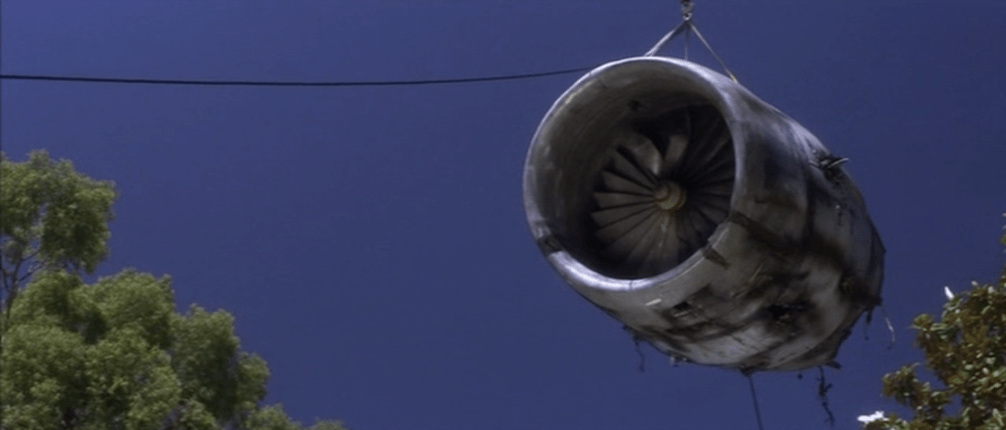
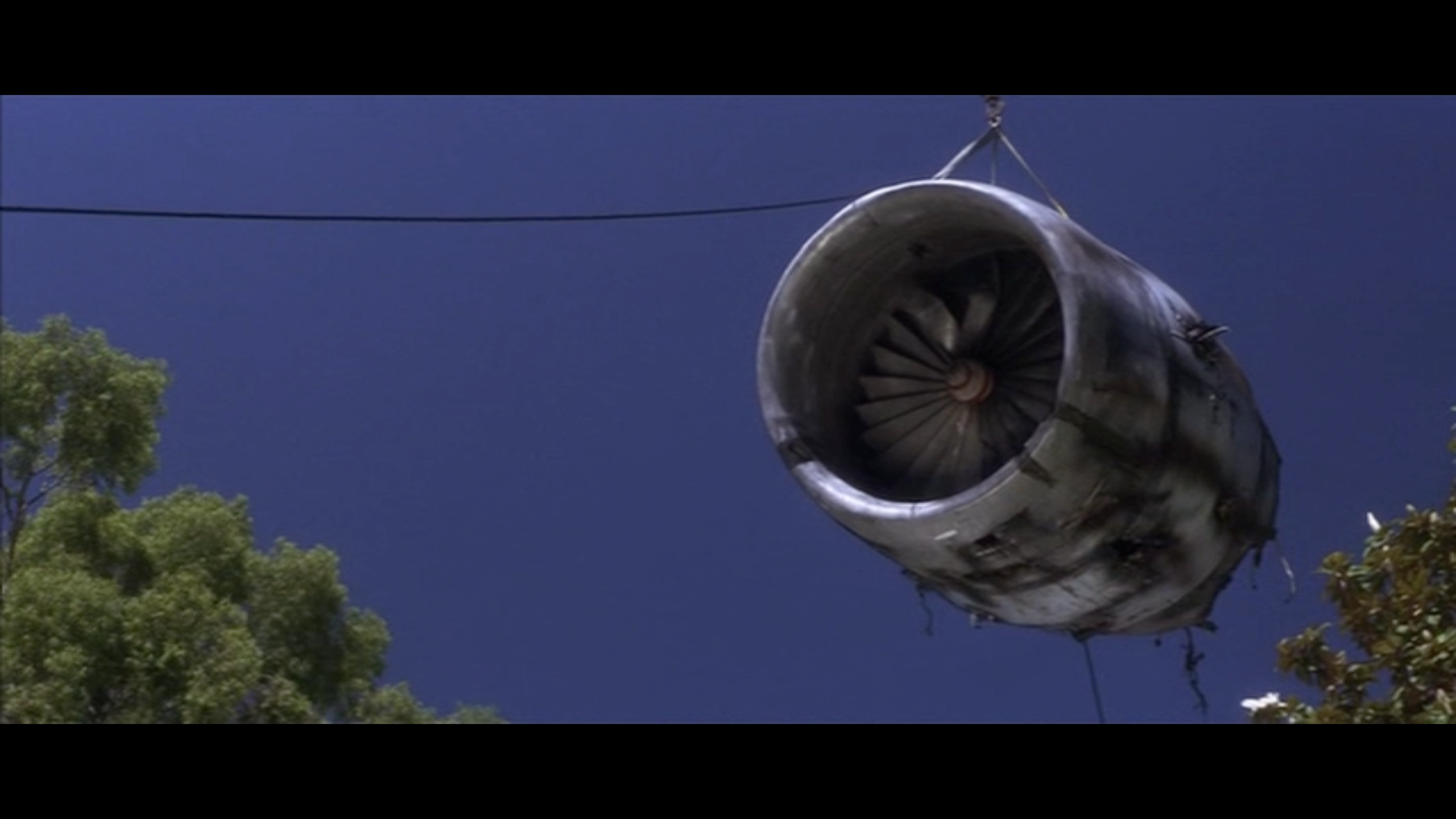
An airplane engine falls through the roof of a teenage boy’s home, and should have killed him: should have, had he not been lured out of the house by an enormous rabbit.

Sound familiar? Then you’ve probably seen Donnie Darko. It is a masterpiece of dark cinema, a mind-bending trip into the world of insanity, and it does so in the most realistic of ways: by making the insanity appear sane. For ultimately, this is what we think, isn’t it, those of us whose grip on reality is tenuous? It’s the world that’s gone mad.

The rabbit plagues Donnie; the rabbit tells Donnie the world is going to end in twenty eight days, six hours, forty-two minutes and twelve seconds. And oh, Jake Gyllenhaal does such a good job of believing it, never doubting it, and descending into the madness that comes with the freedom of knowing it’s all going to end. Yet all the while, we remain rooted firmly in the real world. School goes on; work goes on; life goes on. The rabbit is an illusion; the rabbit is real.

Certainly, the world doesn’t seem like it’s going to end. Nor does it for any of us, of course. Almost certainly, when the end does come, it will be abrupt, it will be instant, and we won’t know any different. But Donnie…oh, Donnie knows.

And it is despair that comes with this. The knowledge that any thing, any action, is meaningless. He burns down the principal’s house, and it is meaningless. A vile secret is unearthed because of it, and it, too is meaningless. He falls in love…and it is meaningless.

The story behind this film unravels the very nature of what is real and what isn’t, and in a very Descartian way dissects the meaning of armageddon. For if we end, the world ends, and there is no way of knowing otherwise. It is an end of life, an end of existence, and most importantly, and end of self.

And in the face of this ending, the destruction of self, Donnie is given a choice, and the choice is this: to let the world end…or to let the world end.

Few people will be given the chance to learn of their death before it comes. Fewer still will make the choice to roll over in bed, and let the engine fall through the roof.

Tales of Despair: Wyndham’s Apocalypse

Does anyone remember John Wyndham? His post-war novels set the stage for science-fiction to come, and despite H.G. Wells‘ prescient War of the Worlds,  he is known to this day as the godfather of the disaster novel.

The influence of his seven stories of terror and disaster have been felt across time and medium, being seen in future novels and films for decades after his lifetime. In particular, his first three novels, The Day of the TriffidsThe Kraken Wakes and The Chrysalids set the stage for apocalypse and disaster, and the strength of human survival in the wake of mass disaster.

Imagine the terror of waking, blind in a hospital, to nothing. No sound, no smell, no sight. Wandering through the streets of London, and discovering that every other person in the great city is equally blind. Some run in fear; some capture the few sighted in violence. Many are dead. All civilization is crumbling around you.

Then, quietly and in the distance, the whisper of monsters approaches. Towering, flesh-eating monsters that ought never to have been released. That ought not to exist. That ought not to be able to move, for they are plants. Yet move they do, and their advantage is great, for among the blind, they sense the movement of the frightened, and strike them down. Poison, stings, death and rotting flesh. Tearing humans limb from limb.

The 2002 film 28 Days Later… pays homage to this brilliantly, with Jim awaking in a hospital to the sound of silence. Stunning scenes of entirely empty London streets reflect the confusion and fright of Bill Masen, suddenly thrust into a twisted reality from which there is no waking, no escape. The fight for dominance among the few survivors parallels the dictatorial colonies of Wyndham’s post-apocalytic vision.

Paramount to these tales is the gut-wrenching realization that there is no return to normality. The world as we know it is gone, and the primal laws of evolution rise: the survival of the fittest. The weak die; the world diminishes. Hope is forsaken, and the sole thought is to make it to the next dawn.

When I first read these stories as a child, I was terrified; I saw tendrils of barbs and poison pushing gently at my window in my nightmares, insidious and threatening. I saw movement in the bushes walking home from school, and ran past the rhododendrons in fright. I haven’t read the novel again since.

However, the most heartbreaking tale of strife remains, to me, The Chrysalids. Here, the apocalypse is long-gone, and the survivors have settled into a rural, medieval society, where preservation of the normal is the law of the bible, and the deviants are hunted down and destroyed. Deviants, however, are abundant. Some are hideously deformed; some are barely noticeable. A single extra toe is cause for banishment and death. And in this setting, a new strain of human comes into being: ones who can sense the thoughts of others. The horror of being driven out by one’s own parents dominates the mood of the story, and I cried bitter tears when David, Rosalind, Petra and the others – mere children, naive and alone in the world – are gradually discovered and hunted in violence by their own families.

Wyndham had his finger firmly on the pulse of despair and hopelessness, inspired perhaps by his horrific experiences in the war, including the storming of the Normandy beaches. Such visions are indelible, and it is possible that these novels were his catharsis; the only way he knew of exorcising these demons.

His terror, his fright and his visions of destruction have inspired generations of creative artists; the world is fortunate to have had such a bleak storyteller.

Tales of Despair: The Darkness of Crows

A young man and a woman live, poor, in the slums of Detroit, deeply and madly in love with each other. They harbor a love of the gothic and the dark, and they plan to wed on Halloween, October 31.

The eve of their vows, there is an attack: their apartment broken into, she is raped, beaten and stabbed. He walks in – desperate, he cries out for her, and she for him. Moments later, he is executed before her eyes. Later, under the blinding glare of flashing blue and red, she dies. The girl she cared for and the cop who found her look at each other, and in a moment, their lives are forever changed.

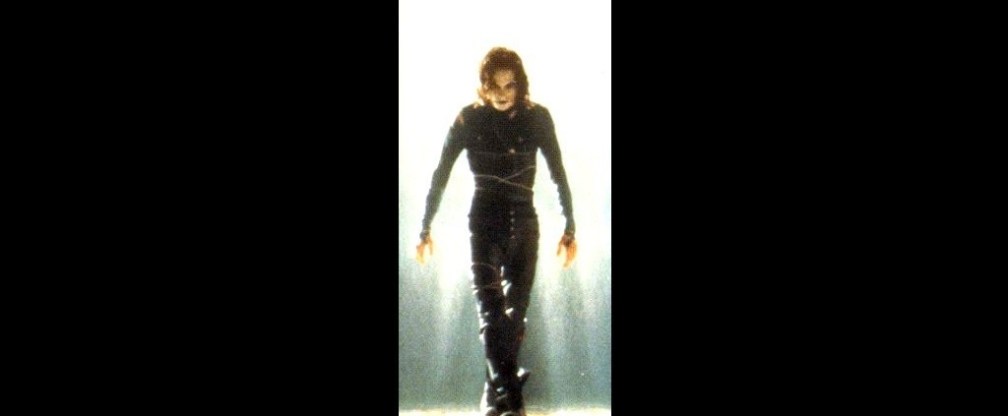
So begins The Crow, the 1994 film that changed the lives of goth kids around the world, and ended the life of Brandon Lee. I was one of those goth kids, and I first saw The Crow in the bitterest depths of my depression, when I believed all hope had gone. I watched it every night for a month, and shed tears each and every time. There are some, I’m sure, that will see this film as little more than the comic book-inspired action movie that it claims to be, but for me there has always been – and will always be – a far greater depth.

Eric Draven, murdered in cold blood before his beloved’s eyes, is raised from the grave one year later by a solitary crow, his strength and guide in his resurrected afterlife. He has returned, and seeks but one thing: retribution for the tragedy wrought upon his fiancée. One by one, he hunts down the four men who ended their lives, and returns their favor to them.

All the while, Sarah, daughter of a drug-addicted prostitute, has learned to live, and rely, on her own, seldom seeing her mother other than for money for food. Her only companion is the defeated and washed-out cop, Albrecht. Gradually, she comes to know of Eric’s return, and seeks him in the ruins of their old apartment. Though they meet, their friendship cannot be rekindled – he is not living.

There is a tone of utter despair to this film, complete futility; even as he takes revenge upon the monsters that destroyed his life, Eric knows it serves little purpose, for the past cannot be changed. In returning, he has brought nothing but hurt to all those around him, inspiring hope in Sarah and then equally crushing it. From the outset, we know that, even should he succeed, he has still lost: his life remains forever gone, and his beloved forever dead.

There is, naturally, a final dramatic battle between good and evil, ending with the beautifully gruesome death of “Top Dollar” atop a ruined cathedral, and the inspiration of hope with the redemption of Sarah’s mother and the reunion between Eric and his long-lost, ghostly Shelley. The most touching scene for me, however, is the meeting between Eric and Albrecht, in Albrecht’s apartment late at night. Albrecht lived Shelley’s dying moments, and through his eyes Eric lives it also. In a touch, every hour of pain and torment fills Eric’s mind, and he recoils, aghast.

What touches me most about this scene, however (I’m tearing up just writing about it!) is what we learn about Albrecht. Against his career, against his home life, against everything he held dear, he remained with this dying girl, this complete stranger, staying by her side and with her hand, until she died. Knowing it was inevitable.

This movie is infused with darkness and despair, gothic tragedy and loss, and yet holds a human compassion beyond many that I have seen before or since. It was everything I needed, and the tears I shed were a sweet, sweet relief.

It is yet a further, well-known tragic addition to this film that Brandon Lee, son of Bruce Lee and Linda Lee Cadwell, died whilst filming when real bullets were substituted for blanks. As such, the film has become as much a eulogy to this bright and emerging actor as it is a piece of dark, gothic cult art. They say no parent should bury their child, and this film – a piece of trite entertainment, comparatively – proved the most terrible loss a person could ever bear.

R.I.P. Brandon Lee
1965 – 1993