Tales of Despair: Metamorphosis


School has a way of taking beautiful works of art and literature and turning them into the most abysmal, monotonous and over-analyzed trite. I was very glad to have read To Kill a Mockingbird long before high school, because it most certainly would have ruined for me. The same is true of The Catcher in the Rye and Of Mice and Men; thanks to my mother’s literary promiscuity (now that doesn’t sound good, does it?), I was exposed to a great canon of wonderful books at a young age, long before school was able to ruin them for me. Some were unsalvageable; I can’t see Macbeth without my mind involuntarily calling up hours of drudgery, trying to find the social implications of the blood on Lady Macbeth’s hands.

One that I barely escaped with was Franz Kafka‘s bizarre tragedy, The Metamorphosis (Die Verwandlung). I discovered it in the school library one day, after someone had suggested it as a great example of existentialism. I’m not to convinced of this anymore, but at the time existentialism was one step away from nihilism, and I was sorts of crazy.

The Metamorphosis is only short, and is very nearly a study in fictional writing taken to an extreme. The best fiction is that which is almost real – introducing a single fantastical element, and watching the fallout. Such is the case when traveling salesman Gregor Samsa wakes up as a giant insect. This is, in a way, the only fiction in the tale; the rest is reactionary.

Imagine being that insect; there is nothing tying you to the reality you knew only the night before; your very body has betrayed you, you are unable to control your movements, and your voice is unrecognizable. Your family, those closest to you, are disgusted by your appearance. Your father wishes you dead, your mother pretends you aren’t there, and only your sister – your closest friend – has even the courage to throw table scraps into the room.

Gregor begins to hide under furniture, all the while desperately clinging to his humanity. His family, seeing his grotesque form, are unaware that he is still able to hear and understand their every word…even when they discuss his own demise.

And eventually, of course, the tale ends; as befits a cockroach, Gregor eventually crawls under a couch, and dies.

Kafka had the strength of will to push his story to its final, logical conclusion; so often remiss in modern fiction, he realized the nature of Gregor’s metamorphosis, and the importance of its permanence. The great changes in life are undoable – both the good, and the bad. Many of us, I’m sure, have at times felt as though we are that insect; deviant, shunned, unwanted and loathed, a burden on those closest to us. And in this, Kafka doesn’t shy away in asking: are we all merely looking for that couch to crawl under?

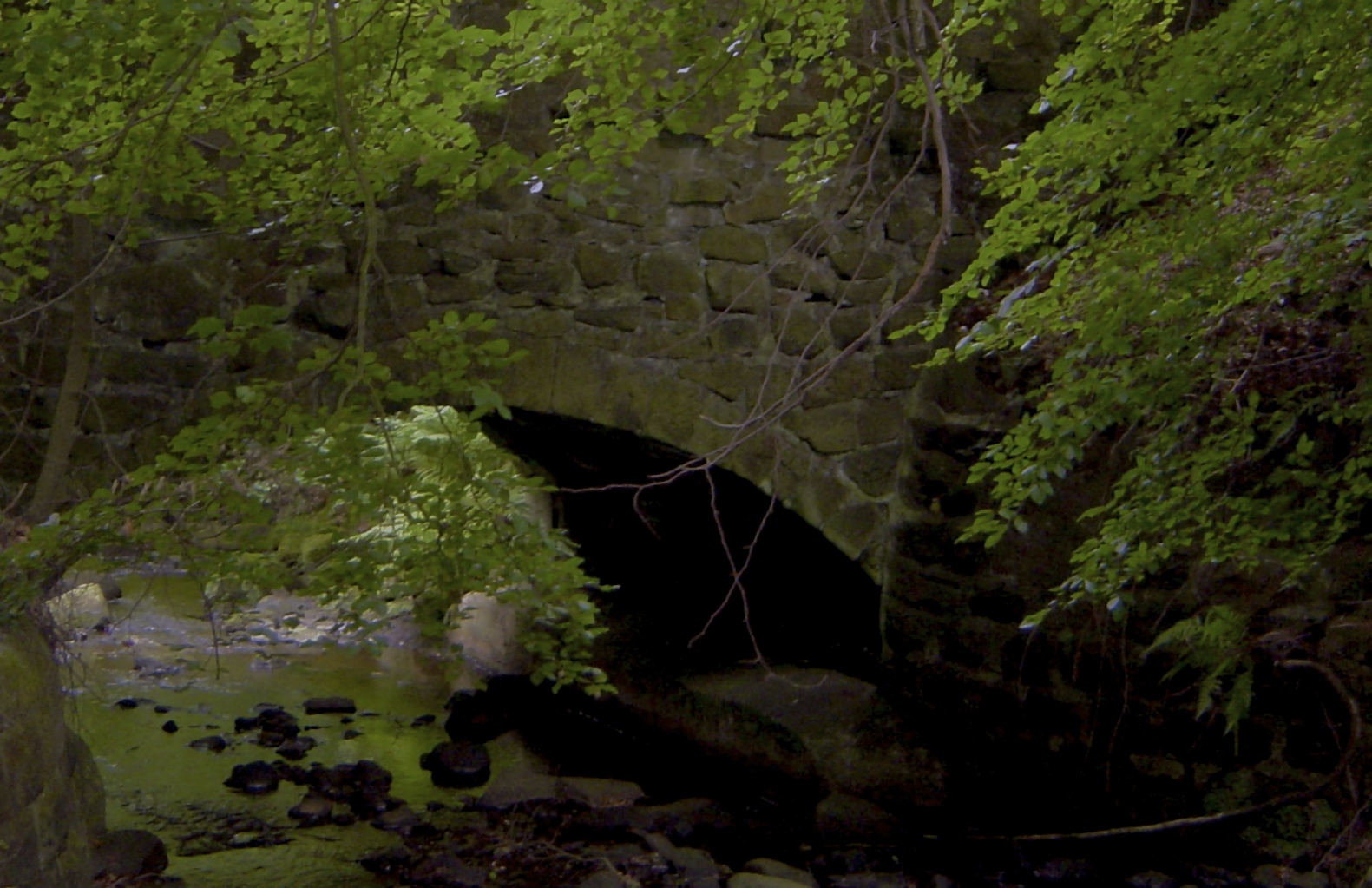
Tales of Despair: Swift Waters Under a Fantasy Bridge

One would normally consider children’s stories – the good ones, at least – to be intriguing, witty, adventurous and begetting a danger that resolves into a heartfelt and touching conclusion. Roald Dahl is wonderful at this; I remember well the tension of so many of his stories; the awful churning as Danny crept through the woods in the middle of the night, looking for his missing father; I remember holding my breath as Sophie hid from the Bloodbottler in a giant snozzcumber, only to end up in the giants mouth; I recall trembling as I turned the pages of The Witches, unable to believe that hero of the story had actually been turned into a mouse.

This particular tale is rather unique in its direction, in that – unlike the rather mediocre movie it spawned – the main character goes through an irreversible change (in this case a metamorphosis) that affects the remainder of his life, even after the end of the tale. The ending of this book is bittersweet; we learn that the boy will never return to human form, and is likely to die within the next few years – around the same time that his beloved grandmother will. What an ending for a children’s book.

There are many stories in the world of great change – of things never going back to how they were. These are the tales that leave us feeling sad and bittersweet, and are the ones that touch our hearts. The Lord of the Rings is such a tale; so is To Kill a Mockingbird, and Nineteen Eighty-Four, and Pet Semetary. Some tales speak of the ultimate change, and bring our characters beyond the edge of death. This is the realm of the classical tragedy, epitomized in works such as Romeo and Juliet.

But these themes of strife, and pain, and death – they are not the themes you would expect of a children’s tale. Even tragedies that involve children (Pet Semetary springs to mind as a particularly gut-churning example) are not written for children.

So what, then, was Katherine Paterson thinking when she wrote the wonderful tale, Bridge to Terabithia? I was young – quite young – when I first read this story. I was innocent, and the closest I had come in literature to tragedy was the Hardy Boys (if anyone remembers, Joe’s girlfriend, Iola, dies in the Casefiles series). It was a cute story, I remember thinking; I identified very much with little Jess, lonely and depressed and shut off, and the strong desire to have a friend with whom to share your innermost thoughts.

Jess, who could draw so well; Leslie, who could bring this out of him so well. She, who could invent entire worlds, and make them so real that Jess could veritably live in them with her. At first, of course, he’s unable to see, but as their relationship deepens (never love, but a iron-clad friendship), he begins to imagine her worlds with her, and they spend many days deep in the woods, crossing the dry riverbed to the wonderful land of Terabithia.

The land that, along with her, would come crashing down. The land that would be flooded and washed away, stripped of life by the same waters that stole hers.

And the land that, in time, would come to be his only saving grace; the one he would build a bridge to.

I cried bitter tears to read this story as a child, and it brings them to my eyes to write of it now. I felt betrayed – how could she? How could that be how it ended? It was a children’s book – people don’t die in children’s books.

But of course, people do die in our children’s lives. And it is a horror, and a tragedy, but it is also a part of life; they are rare, but those tales that touch on our mortality, and teach us the frailty of life, are the ones to be cherished above all others.

Tales of Despair: The Suffering of Artists

This is a slightly different take on Tales of Despair this week; rather than focusing on a particular artist, I want to address the nature of despair and depression in art – why is it that darkness forms such a large part of the things we create? What is it that drives the most wonderful among us to the brink of despair?

There was once a young boy who grew up in an idyllic family environment; a boy who enjoyed life and love to paint and draw. And then, when he was only seven years old, his parents divorced. No one spoke to him about it. No one asked him how he felt. His father promised not to remarry, and did. He had another child, and the boy felt replaced. His mother remarried, and was beaten, and abused, and hospitalized. The boy watched each time. The adults, they didn’t see him. They didn’t care.

He continued to draw, and to paint. His work grew dark. He learned to play, and his music was dark. He took drugs, and it took his mind away, and relived the pain for a short moment.

And when he left his home, he avoided people; he made few friends, and they shared his misery. Some of them played too, and they began to play together. Out of the depths of depression, the music they made lifted him; he wrote about his pain, and he sang it to the world. And the world – they drank it deeply, and said he was a great artist. They said he was the voice of a generation; they said he would change the world.

And he didn’t care for what they said. Each word of praise demeaned his writing, abused his art. His music hated the world, and they were too dumb to see it. And he lost the joy his music brought him, and he began to despair. He sank, and was consumed by the black, and knew the world, for him, was ended. One April day, he locked himself away, and killed himself.

He was twenty-seven, and his name was Kurt.

His death was untimely, and it is accepted as a tragedy. Yet it is a tale that is told, over and over again, throughout history and the world of creators.

We suffer, we despair, and the rest of the world asks, why? Of course, the rest of us understand it all too well; insight grants us the pain of doubt, the fear of rejection, the knowledge that all goodness comes to an end.

Yet, why is it that so many of us, so many of those who create, are so afflicted? Hands up if your are a happy artist. In this imaginary crowd, you may well be in the minority. Is it intrinsic, or wrought by outside influence? Do we create because we despair, or do we despair of our creations?

Perhaps it is some of both. When I write, I am lifted, as Kurt was, to a higher plane, a place where words and music float and flow, and the terrible visions in my mind find their way to paper and into sound in the air, and I am relieved of their pain. But when I come down, I look upon my creations, and I am filled with loathing: they are ignorant, they are plagiarism, they lack all subtlety, and are but a poor shadow of the great.

Perhaps the need to create is driven by the hopeless desire to express the inexpressible – how could anyone understand the absolute certainty that the things we create, that bring such value to so many, are inherently worthless? How could anyone understand what it’s like to be consumed by blackness, until your very vision is tinted and the world turns to grey? There are no words, no colors, no sounds that can explain how no bodily wound can equal the agony of a mind turned upon itself.

And yet we persist, we continue to try. We paint with blacks and reds; we write with heavy words that drag down the soul; we play in minor keys and descending notes, recreating the descent into the final, endless darkness.

And eventually, we may join the Kurts, the Vincents, the Ernests and the Sylvias and Virginias; and how could anyone understand the comfort of knowing that, in a world that is chaos and destruction and uncontrollable evil, we have at least the power to bring about our own ending.

We are doomed to create, and doomed to suffer; may we be at least also be doomed to see the beauty in the work of our fellow creators, if never in our own.