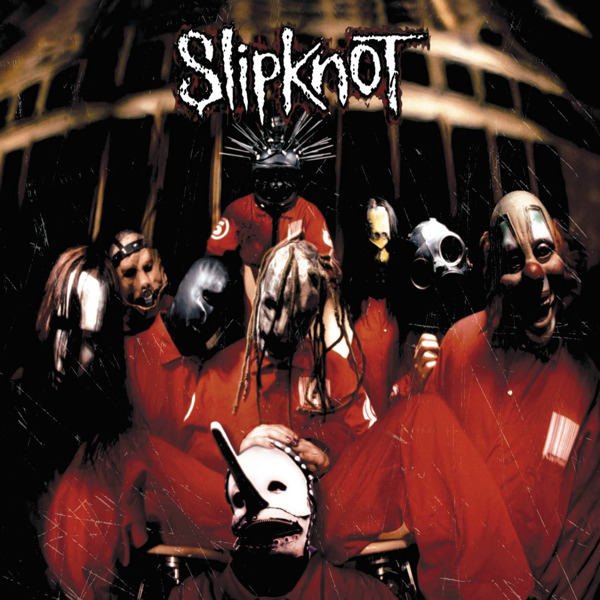
Music I Love: “Slipknot”, Slipknot (1999)

Slipknot

There’s frankly not a whole lot to be said about this seminal album that hasn’t already been discussed ad infinitum in every possible media avenue in existence, but that doesn’t stop this from being one of my absolutely favorite albums of all time. I once wrote a dissertation about the expression of emotion through music, and Slipknot featured pretty heavily.

Slipknot were a nine-member (sadly now only eight) band from Des Moines, and to read through any of their lyrics, they had some issues:

Insane – am I the only motherf***er with a brain?

I’m hearing voices but all they do is complain

How many times have you wanted to kill

Everything and everyone – say you’ll do it but never will

Eyeless – Slipknot, 1999

It’s hard to recall the impact these – and the rest of the album’s – words had back in 1999. From the opening few seconds of (sic) you are bludgeoned by a frenetic, nearly incoherent rage, an insatiable fury that could stand up to an atomic blast and win. I can’t think of anything in the realms of rock or metal – or music in general – that even came close to such a level of energetic hate. In particular was the subject of this vitriol; unlike previous “angry” bands like Rage Against the Machine, there were no targets for Slipknot’s hostility, no politics; here was a terrifying group of people with not pity or mercy.

It’s scary enough to be facing an uncontrollable madman, never mind a vicious and calculating psychopath.

Which is ironic, because Corey Taylor and Joey Jordison et al. are, in conversation, a bunch of pleasant guys, albeit many with disturbing or traumatizing pasts. In a way, the band became cathartic for them: a way to express the inexpressible, to release the rage that had built up in them.

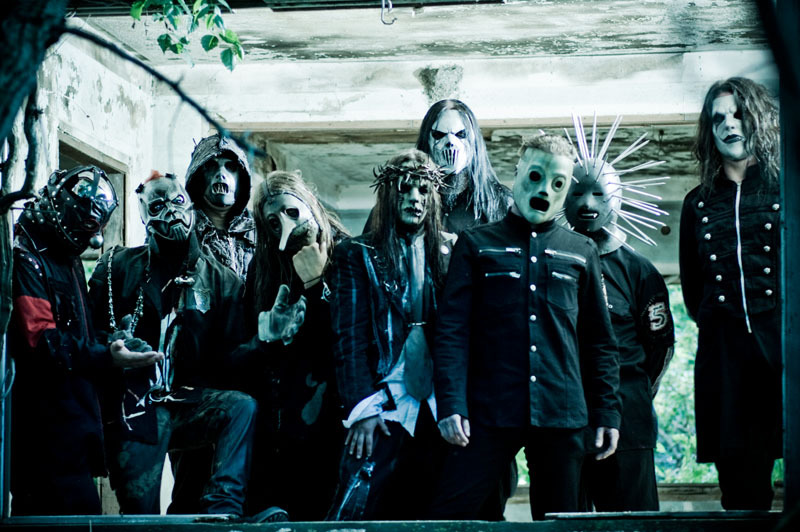
Another disturbing aspect of this burgeoning phenomenon was the use of grotesque and terrifying masks and costumes, furthering the disassociation of these people and their music from reality. By dehumanizing themselves, they created a heightened level of terror – an image of demons, quite possibly directly from the pits of hell.

So controversial was their debut album that it was considered likely that the group would either disband or kill each other before ever recording another album. Instead, they released Iowa in 2001, shattering their first album’s popularity by reaching #3 in the US Billboard 200. If Slipknot was an explosion of raw fury and rage, Iowa was a more refined hatred, a feeling of a more calculated and targeted ire, which of course was all the more disturbing; it’s scary enough to be facing an uncontrollable madman, never mind a vicious and calculating psychopath.

Their style and emotion became ever more refined with Vol. 3: The Subliminal Verses, and – if such a thing is possible – a more mellow kind of anger with All Hope Is Gone. However, none of their succeeding albums can come close to the untamed fury of their first album. It’s raw, abrasive, offensive and uncomfortable, and it is because of these qualities that it is such an outstanding work. There is nothing I have come across in the history of music recording that comes so close to the very embodiment of demonic rage and hate; it is likely as far as music can get whilst still remaining coherent.

Slipknot can be cathartic for me, too; whenever I’m feeling stepped on, maddened or infuriated, a play through this album is more than enough to get it all out. Like they said:

Who the f*** are you?  F*** you!

Better suck it up ’cause you bled through

Better get away from me

Stay the f*** away from me

Eyeless – Slipknot, 1999
SLIPKNOT-1

Music I Love: “A Fine Day to Exit”, Anathema (2001)

Following on the heels of our heart-to-heart about depression, it seems only fair to share what is for me possibly the most depressing album I have ever heard.

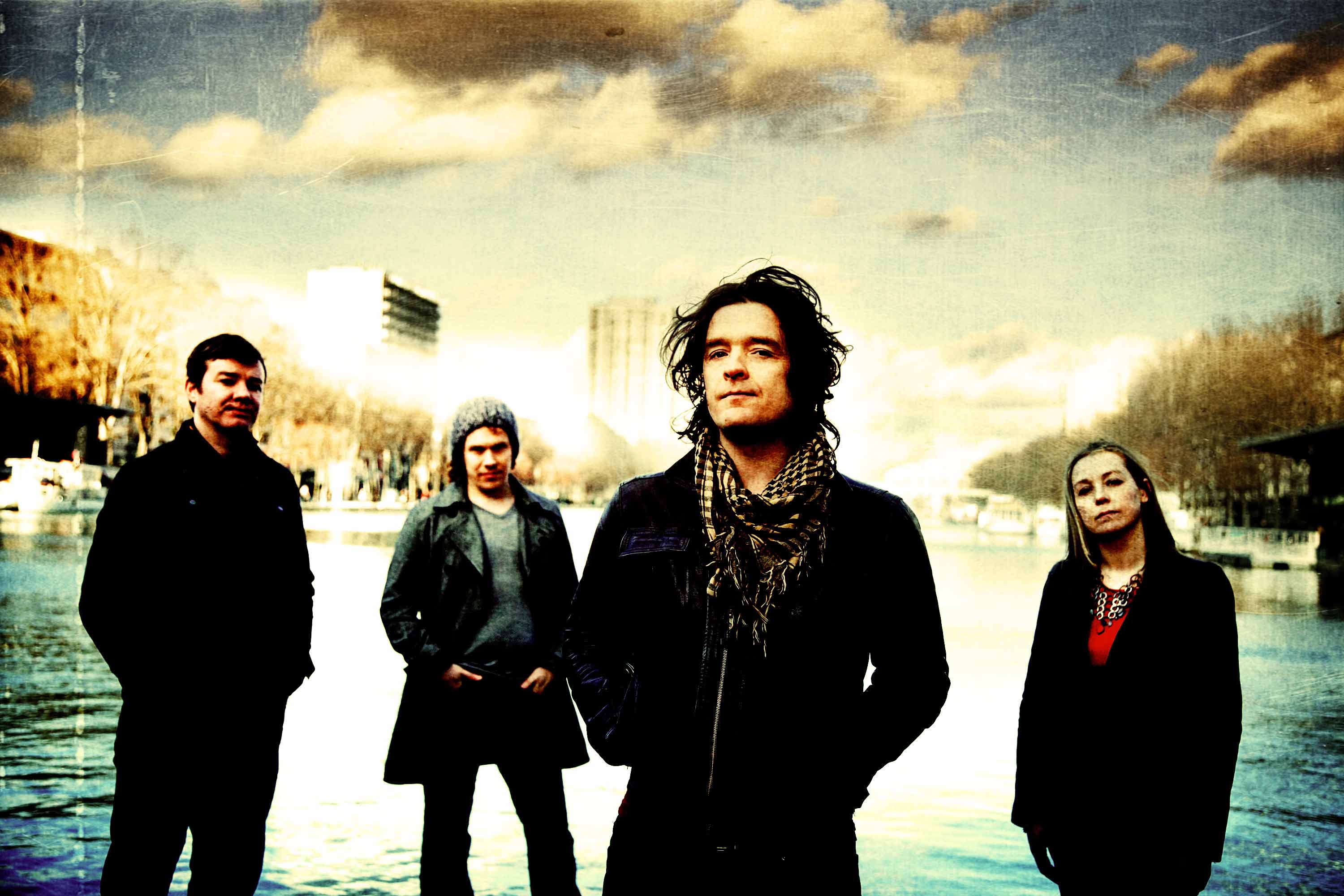
Anathema is the final piece of my ‘big four’ (the others being My Dying Bride, Opeth and Sentenced). Their roots begin right along side fellow Northeners My Dying Bride, a heavy and dirge-like Doom Metal band from Liverpool. It didn’t take them long to gain the attention of Peaceville, who signed them for a four-album deal.

The Crestfallen (EP) was their first mainstream release, a 32-minute dirge of atonal distortion and howled vocals. Even here, though, their more sensitive side, which would only become more prominent, can be heard in tracks such as Everwake. Their first full-lenth, Serenades, brought this musical style to a strong consistency, winding from leaden and moaning distress such as Lovelorn Rhapsody to haunting, acoustic interludes like J’ai Fait Une Promesse. The closer is an epic 23-minute drone; synths and soothing harmonies intertwine, changing slowly and subtly.

The following EP, Pentecost III, carried this style further, focusing on lengthy, heavy and atmospheric tracks. When The Silent Enigma came out in 1995, however, the beginnings of a marked change in style became apparent. Though still heavy and filled mainly with growled vocals, the musical style began to become less dissonant, with songs such as Cerulean Twilight and the wonderful A Dying Wish bringing a desolate and sad tone to their style.

Then, something happened that cemented the transition from Doom Metal to atmospheric, haunting and dismal rock: Darren White, the vocalist, left. Rather than hiring a new vocalist, guitarist Vincent Cavanagh took up the mic. Unable (or unwilling) to growl like Darren, 1996’s Eternity is now a classic album, an epitome of their canon. Alternative 4 carried this yet further, becoming ever more distant from their metal roots. By the time Judgement was released in 1999, the heaviness of their past was all but gone, leaving behind a deeply sad style of alternative rock.

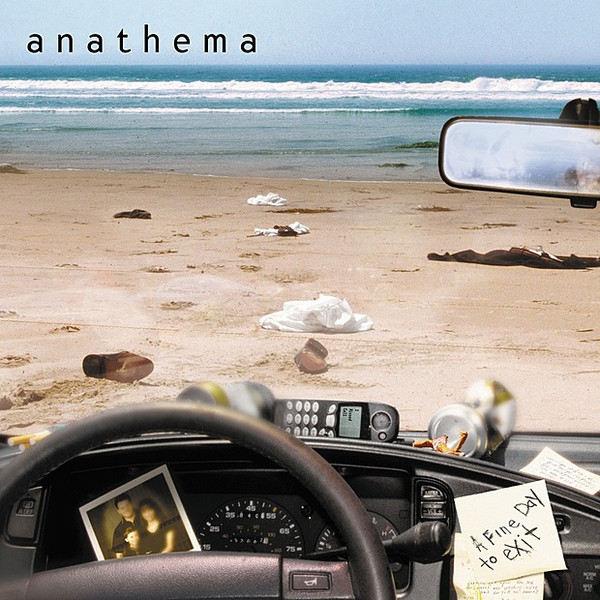
And then came A Fine Day to Exit, in 2001. This is an incredibly important—and precious—album for me. Every one of the nine tracks simply drips with depression, and this became the soundtrack to my life at the time of its release. This album is Anathema perfected; nothing before or since has quite touched its sense of absolute, utter despair.

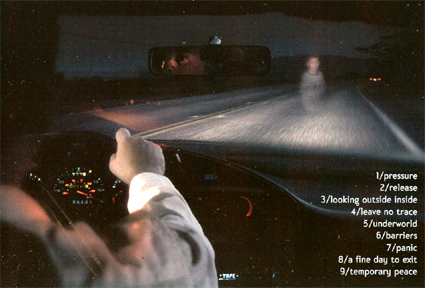
Both musically and lyrically, A Fine Day to Exit carries the listener on an uninterrupted journey through landscapes of darkness, each song blending seamlessly into the next. The piano-driven ostinato of Pressure feels like a crushing weight on the chest, a feeling of stress that doesn’t life. As it fades, Release picks up, its striking opening guitars lulling the listener into its landscape of sadness. Release eventually peters out to the subtle sound of heating pipes in an old, run-down building, and the inescapable arpeggios of Looking Outside Inside gently ease their way into the ear. This is perhaps the best song on the album, building up slowly, gradually, from acoustic nothingness into a rage of entrapment.

As feedback leads the way into Leave No Trace, the album settles into a soothing swaying between slow and faster-paced songs, and the lyrics become noticeably more unstable. An unsettling feeling of a descent into madness begins to creep into the music, with Underworld turning out some disturbing imagery.

Climbing up the wall gonna creep between the cracks

Get out of my skull tie the rope around my neck

Destroy all emotion gonna rip my face to shreds

Cut my eyeballs open

Underworld – Anathema, 2001

(Breaking Down the) Barriers brings a sense of calm, and indeed feels like a sort of conclusion. Heart-rending, it speaks of the ever-growing disconnect between two people who realize they are utterly disconnected. Try as they might, there is no salvation.

And then, all hell breaks loose. A great pause of silence follows …Barriers, as if preparing for the storm that is to follow. Rapid, wavering guitars then break in, musically reflecting the sudden and complete unbalance of Panic‘s disturbing words.

I don’t think it’ll all end up like this

There’s spiders on the wall and they stink of piss

Dead heads lying in the corner

Staring at me making me feel bad

I put my hands up to my eyes

But the holes in my palms let me find a way

To corner you…

Panic – Anathema, 2001

Racing through at breakneck speed, Panic represents the peak of the album, the final release of the terrible tension of an unstable mind. From here it descends into the final moments of utter despair, the title track A Fine Day to Exit bringing with it a sense of absolution.

Then, finally, the perfect conclusion: Temporary Peace. Slow, quiet and bleak, it is a resting, a peace; a settlement from the madness. It speaks of finality, of the the darkness dragging you under for the last time. Its closing lines reflect this, simultaneously intimating the momentary quiet before the ending.

Beyond this beautiful horizon

Lies a dream for you and I

This tranquil scene is

Still unbroken by the rumours in the sky

But there’s a storm closing in

Voices crying on the wind

The serenade is growing colder

Breaks my soul that tries to sing

And there’s so many thoughts

When I try to go to sleep

But with you I start to feel

A sort of temporary peace

There’s a drift in and out

Temporary Peace – Anathema, 2001

And as the final notes ring out, the music dissolves into the sound of breaking waves, and the muttering nonsense of a madman.

The flow of this album so perfectly reflects my own cycle of madness that it cuts me to the very soul, unfailingly bringing tears to my eyes by the final dying sounds. The tension, the guilt, the increasing loss of control, until it finally all breaks loose—and then, when the rage is spent, dissolving into nothing but the desire to fade into absolute blackness, and never return.

This is not an easy album, but it is ultimately rewarding. Just beware: it will not put you in a happy mood.

Music I Love: “Bloody Kisses”, Type O Negative (1993)

I spent most of my youth as a Goth (with a capital G), and for those of you who remember that time (or those of you who are still there), the music you listened to more or less defined who you were. In many of my hopeless and black moods, of course, there was nowhere to turn to than the wonderful misery of My Dying Bride, or the gloom-laden ballads of Sentenced. For the anger and fury, there was nothing else but Metallica and Slayer. When it was time to absolutely, once and for all I’m-really-doing-it-this-time slit my wrists, it could only be Marilyn Manson.

But, among all of these, there was one band that defined Goth more than any other I could think of, and this was the music I turned to when I simply wanted to dress in black, don the crosses and the black eyeliner, and sit moping in the back of a pub, pitying the fools who thought they were having a good time. That band was, of course, Type O Negative.

Type O Negative had a long and painful birth. As far back as 1976, four kids from Brooklyn were already gathering together in basements and garages, throwing together punk covers and goth rock. Like any young band, they went through endless lineup changes, finishing off in the eights with basically the same members as they had started out with. However, it took until nearly 1990 for their subversive music to be noticed, and their debut, Slow Deep and Hard to be released.

Ever mocking in their misery, Slow Deep and Hard featured extremely long, totally un-radio-friendly heavy metal doom, with bizarre (yet ultimately comprehensible) titles such as Unsuccessfully Coping with the Natural Beauty of Infidelity, a rather graphic song about being cheated on, to Gravitational Constant: G = 6.67 × 10^8 cm^-3 gm^-1 sec^-2, about suicide. While popular, it wasn’t until 1993 that the band truly broke through with Bloody Kisses.

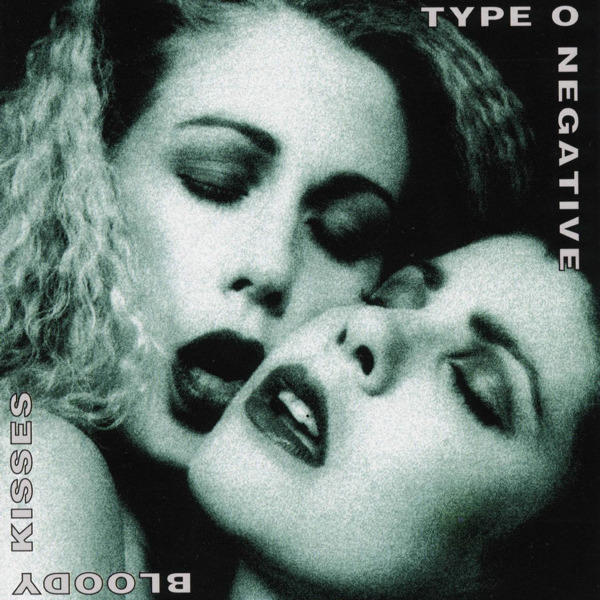
A gothic masterpiece, Bloody Kisses is ultimately most famous for the title song, and the miserably humorous Black No. 1 (Little Miss Scare-All). The album extends for a full 73 minutes, passing from dark religious cynicism on Christian Woman to the bizarrely drudging cover of Seals and Crofts’ Summer Breeze, to genuine, suicidal misery on Bloody Kisses (A Death in the Family).

In hindsight (hind-hearing?), every song on this album is excellent, including the disturbing interludes such as Fay Wray Come Out and Play and Dark Side of the Womb, but at the time, the songs that truly spoke to me were those drenched in gloom and blackness. Black No. 1, so titled after the popular hair dye, references everything stereotypically goth from vampires to Halloween to the Munsters, and even a nod to Ministry‘s 1984 hit, Every Day is HalloweenChristian Woman, with its rather explicit lyrics of religious control and sexual repression, spoke deeply to the sexually-desperate teenage boy in me.

The one song, however, that truly got to me, that empathized with my own misery and formed the soundtrack for the trips to the darkest places in my mind, was the title track, Bloody Kisses. A depressingly morose song about a girlfriend who had committed suicide, it speaks of the strength it takes to kill oneself, the misery of being left behind, and challenges the dogma regarding suicide as a cry for help, or for attention. Surrounded by darkness, hopelessly depressed, and hopelessly attracted to a girl who was just as hopelessly depressed as I was, the lyrics spoke my own thoughts through the song.

A pair of souls become undone

Where were two now one

Divided by this wall of death

I soon will join you yet

With my blood I’ll find your love

You found the strength to end you life

As you did so shall I

 Bloody Kisses – Type O Negative, 1993

Though my mind is (sometimes) in a better place now, this song continues to hold a special place in my heart, as a reminder of just how dark the world can be. Type O Negative continue to be a favorite band of mine, and their music of darkness and depression are all the more poignant now – Peter Steele, founding member and singer, died in 2010 from heart failure, at the peak of his abilities. He was only forty-eight years old. Needless to say, there will be no further Type O Negative, but the seven albums they left us are a memory unto themselves – a biography of the misery, depression and black humor of the man who created them.

R.I.P. Peter Steele

1962 – 2010