Music I Love: Piano Trio No. 1 in B, by Brahms

Work: Piano Trio No. 1 in B, Op. 8
Composer: Johannes Brahms
Year: 1854 (Original Version); 1889 (Final Version)

Movements:

  1. Allegro con brio
  2. Allegro molto – Trio (Meno allegro)
  3. Adagio
  4. Finale (Allegro)

Brahms is a fascinating composer to me; aside from the beauty and passion of his music, he was a notorious perfectionist, burning old manuscripts if he felt they weren’t up to his standard – even years after he originally wrote them. His piano trio in B – listed as his first, and only his eighth composition ever – is dated 1889, only eight years before Brahms’ death in 1897. Brahms wasn’t a particularly prolific composer – following in the footsteps of Beethoven and Schubert, but he wrote more than eight works in his lifetime.

The reason his first piano trio has such a late composition date is because it was, in fact, originally written in 1854, when Brahms was only twenty-one. A sprawling opus, it’s one of the few surviving early manuscripts that Brahms left behind; so many others were lost to his passion for perfection. Brahms rewrote the piano trio in 1889, significantly shortening several movements and almost completely rewriting others.

It’s interesting, because to listen to the two versions side by side doesn’t immediately reveal one as better than the other; in many ways, they’re simply different. The opening melody of the first movement, introduced on piano for a few measures before the cello and violin enter, is heart-meltingly beautiful, and luckily one of the things Brahms didn’t change, but it isn’t long before the two pieces diverge, and don’t really come back again at all.

It brings up the complex relationship between the artist and the audience. If Brahms had had his way, no one would ever be aware of the 1854 version of the work; we’d all only know (and the version that is most often performed, is, of course) the 1889 version. But are they two distinct works? Or is one simply a revision of the other, to be known and played whilst the original settles to dust?

Once published, who does art belong to? Does the artist have the right to retract a piece of music that, for thirty-five years, stood untouched and was beloved the world over? What happens to the original, when the new one is so significantly changed?

I don’t think there are any simple answers to this, but it is a curiosity that, in this instance, we have the ability to hear what Brahms thought was good music at twenty-one, and to hear his opinion of that same music at fifty-six (clearly he didn’t care for most of it).

As for me, I’ll gladly listen to either version – from the gloriously melodic opening of the first movement (one of Brahms’ best melodies by far) to the jittery unease of the Scherzo and the passion of the Finale, this is easily one of my favorite pieces of music in the world.
Music I Love: Symphony No. 4 in F minor, by Tchaikovsky

Work: Symphony No. 4 in F minor, Op. 36
Composer: Pytor Illyich Tchaikovsky
Year: 1878

Movements:

  1. Andante sostenuto – Moderato con anima
  2. Andantino in modo di canzona
  3. Scherzo (Allegro)
  4. Finale (Allegro con fuoco)

I’ve written before about my love for Tchaikovsky’s music – in particular the emotional drama of his sixth symphony, the Pathétique. Growing up on a musical diet of classical- and romantic-era compositions, Tchaikovsky represented to me the pinnacle of angst and turmoil, with his grandiose themes and bombastic orchestrations. Even after I discovered the high-octane energy and gothic tragedy of rock and metal, Tchaikovsky remained a staple of my musical journey, and one I frequently return to when I’m feeling emotional, dramatic, or simply in need of something more refined and cultured than blast beats.

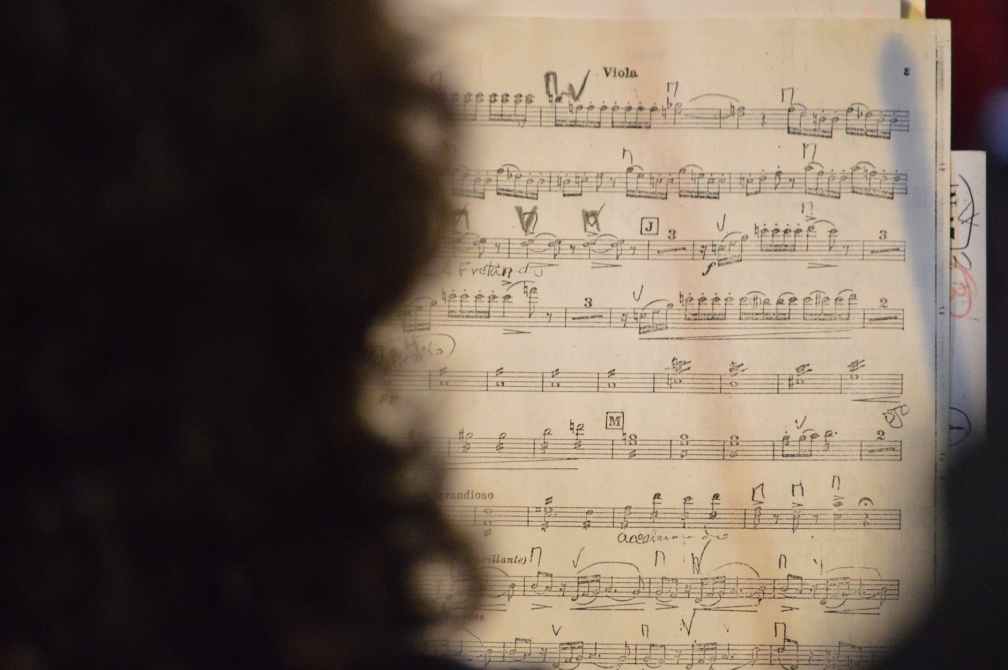
In fairness, I could write lovingly about almost any of Tchaikovsky’s compositions – from the pomp and flair of his first piano concerto to the subtle tensions of his Romeo and Juliet fantasy overture – but one work that stands out to me, for its thematic inventiveness, intricate orchestration and Mozartian way in which the material is combined in the finale, is his fourth symphony in F minor. From the militaristic brass of the introduction to the dizzying scales of the finale, this is one of Tchaikovsky’s most musically memorable works, along with the Nutcracker suite and the 1812 Overture.

It’s also one of his leanest symphonies – even the first movement, at nearly twenty minutes long, doesn’t outstay its welcome. The material is presented, developed and recapitulated in equal measure, with each theme weaving seamlessly into the next, and yet distinct and separable all the same. As is usual for Tchaikovsky, he leans heavily on the brass instruments to carry the weight of the music, but the dancing woodwinds and dashing string scales bring a levity to what might otherwise have been overly heavy material.

The second movement, a traditional slow movement, is lyrical and sparse, a delicate balance of strings and woodwinds presenting new material whilst harkening back to the quieter moments of the first movement. The scherzo is utterly unique, played almost entirely on pizzicato strings and scattered flutes and oboes, with a short melodious middle and a recap that builds to a false crescendo before fading out into the blasting opening of the finale.

And what a finale! Crashing cymbals and screaming strings back percussive, staccato horns and trumpets at full blast in F Major – a joyous, bombastic retelling of the first movement’s dark and ominous opening notes. Furious flurries of string and woodwind scales move things forward with relentless drive, until a rising passage of frantic trumpets leads back to the original opening theme from the first movement – an unexpected and brilliant connection of the start and end of the symphony. And when the finale’s main theme triumphantly returns with double-time brass chords to close out the movement and the work, it’s impossible not to be flush with excitement and sheer enthusiasm for the breakneck pace of the music.

Tchaikovsky undoubtedly suffered from a great deal in his lifetime, and some of his works indicate a strong possibility of bipolar disorder; if so, this certainly represents a period of manic joy – a kind of feverish ecstasy, a blinding brightness that no despair can overcome, and an enduring sense that anything, any wrong, can be overcome with enough positivity.

I listen to this symphony when I need to feel energy; I listen to it when I need to feel calm. I listen to it when I need a reminder that not all in the world is doom and gloom – and, simply, when I want a break from the turn-it-to-eleven mentality of heavy metal.

This is one of Tchaikovsky’s underrated masterpieces, and I highly encourage you to seek out a good recording today.

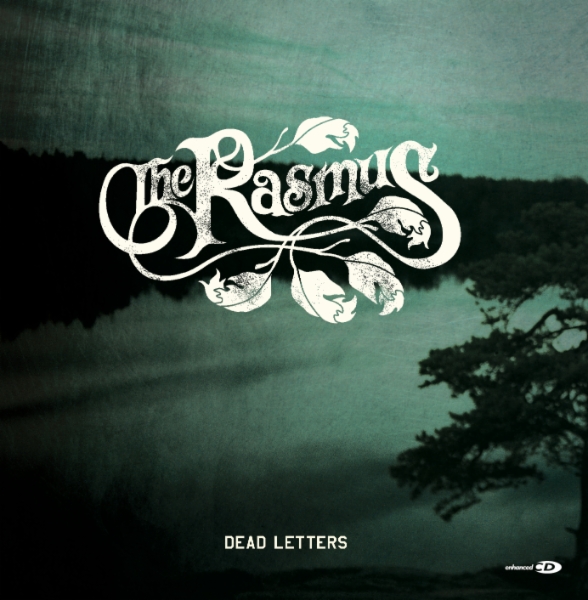
Music I Love: Dead Letters, by The Rasmus

Album: Dead Letters
Artist: The Rasmus
Year: 2003

Track Listing:

  1. In the Shadows
  2. Guilty
  3. First Day of My Life
  4. Still Standing
  5. In My Life
  6. Time to Burn
  7. Not Like the Other Girls
  8. The One I Love
  9. Back in the Picture
  10. Funeral Song

I discovered The Rasmus relatively late in life, having already lived through the angst of my teens and matured from adolescent depression into the full-blown mental illness of bipolar disorder, and I remember thinking to myself, damn – I wish I’d known about them when I was fifteen.

Despite getting their start in the mid-nineties, the Finnish rock group came to worldwide attention in 2003 with the release of their fifth album, Dead Letters. From a pop-rock beginning, Dead Letters takes a turn firmly into goth-rock territory, with dark and miserable lyrics reminiscent of their home-grown contemporaries, HIM.

Yet unlike HIM, whose music tends to drip melancholy and sadness, The Rasmus maintain a dark yet upbeat bounce throughout their work, whether on the syncopated beats of In the Shadows, the epic chorus of Guilty, or the metal-tinged riffs of First Day of My Life.

Above their previous – and some of their later – albums, though, the overall flow of Dead Letters is impeccable, with mid- to fast-paced songs taking over the first side, while the more mellow back half – with ballads like Not Like the Other Girls – leads into the raucous Back in the Picture, before petering out dramatically with Funeral Song.

This is an album that would have made a huge difference to me in my teen years, and even since then I’ve played it over a hundred times with relish, because its anthemic goth-pop tracks are everything I wanted to hear but didn’t know existed.

The Rasmus have continued to release excellent albums, from their excellent follow-up, Hide From the Sun to their U2-inspired eponymous release in 2012, but Dead Letters remains their defining album to this day, and will live on for me as an epitome of fun goth rock.