
A Year Ago Today: Stickley Museum, NJ

I’ve always enjoyed working where I do, but I’m particularly proud of my peers and leaders at the moment for pushing for ongoing conversation around race, social injustice and prejudice. In a time where it seems like everyone is jumping on the George Floyd bandwagon, then jumping off as soon as something else comes along, where I work has – so far – maintained a steady grasp on the importance of challenging racial bias both with our teams and with our customers. We have meetings at least once or twice a week around the subject, and have started to provide venues for black voices to be heard across the company – and acknowledging that even so, there’s a lot more work we have to do.
During one of these meetings, the topic of racial humor came up – specifically, the notion of laughing uncomfortably at racist jokes, or looking the other way, or simply ‘letting it slide’. And the overall consensus was – as one might expect – that racist humor is pretty much not okay.
Personally, however, I think humor is actually a much more subtle and complicated topic than simply ’right vs. wrong’. On the whole, I tend to agree that a racist joke for the sake of being racist, for shock value, or because it actually reflects your true ugly beliefs, is definitely not okay. But this begins to toe a delicate line – if something is taken off the table as a subject of humor because it’s offensive to some, then where do we draw the line at what is and isn’t okay to joke about?
I realize this is an old subject, and there are many who’ve debated it far more eloquently than I’m able to, but it’s nonetheless an important one. After all, we humans love to laugh, and there’s not a whole lot of humor that doesn’t come at someone’s expense. Whether it’s an edgy pedophile joke or simply a punny dad joke, somewhere along the line someone is put out. I think the main reason for this is because of the very nature of humor: we laugh when something clashes with our expectations, prejudices or preconceived notions about a particular topic in an unexpected way. Take one of my favorite jokes from when I was a kid:
Q: What do you get when you cross a canary with a fan?
A: Shredded tweet.
I pity you if you didn’t at least roll your eyes at that one. But the implication is in fact rather violent – a canary fed through a fan would be a cruel, bloody and horrific mess. PETA would not approve.
So should that joke be considered unacceptable? I think most people would find it pretty innocuous, but I can’t deny that there are some people in the world who might actually be offended.
Of course, there are subjects that are far more controversial than childish animal cruelty puns; racism, sexism, child molestation … there’s really no end to the extent of vile and horrible things that humans are capable of, and these are of course very serious topics that should be discussed in a serious manner if we are ever to find long-term solutions to the problems they give rise to.
But we aren’t all capable of changing the world; everyone is not a saint, and most of us struggle as it is to get through our daily lives with our minds and emotions intact. In fact, the vast majority of us rely on humor to diffuse situations, to make life more tolerable, and to simply come to terms with some of the worse things in the world.
So what is okay to make fun of, then, and what isn’t? Can I make fun of a friend for being outrageously gay? Can he make fun of himself for being outrageously gay? Can I poke fun at Mohammed? Or the people who violently protest his depiction in media? An incompetent president for drinking covfefe in the morning? Do I have to limit myself to G-rated humor and wordplay? Innuendo can be incredibly sexist; even an offhand remark about self-tan could come off as racist.
In one sense, there is a simple answer, in which I’ll paraphrase one of my favorite satirical shows ever, South Park: either everything is okay to make fun of, or nothing is. The ‘line’, so to speak, is entirely arbitrary, depending on the audience and the perception of the people both telling and hearing the joke. If I make a Catholic priest altar boy joke, there is a very specific demographic that will likely take great offense to it; most other people would probably laugh. If I make a Muslim joke, it’s pretty likely that those demographics will be completely reversed.
But at the same time, the concept of ‘all-or-nothing’ is still something of an oversimplification. Yes – if we start arbitrarily saying certain things are off-limits, then there’s really no stopping the train until humor is gone forever. I mean, even Winnie the Pooh makes fun of freaking mental health, and where would we be if we had to ban children’s media because it might offend someone?
I think that there are several other aspects to humor that need to be taken into consideration before simply saying something is or isn’t okay. Of these, perhaps the most important is intent. And I don’t mean whether you simply meant to offend someone or not; instead, carefully consider who the joke is actually making fun of. To revisit South Park for a moment, consider the episode dealing with the N-word, With Apologies to Jesse Jackson. This is actually one of the most spectacularly insightful points on racism I think has ever been made in mainstream media, and it does it in one of the most vulgar and offensive ways possible.
For context, it starts with the character Randy Marsh on a game show, having to guess a word based on the clue ‘people who annoy you’. The letters provided are, of course, N, blank, G, G, E, R, S: the real answer being naggers.
You can of course guess what Randy shouts out instead. This leads to a hysterical downward slide in which Randy kisses Jesse Jackson’s actual ass as an apology, and ultimately sees him labeled as the ‘N-Word Guy’, leading to prejudice, abuse, and finally a nationwide ban on the phrase ‘N-Word Guy’.
So why is this okay? How is it South Park can get away with hurling the n-word around dozens of times, making white people appear as the victims of racial injustice, and portraying Jesse Jackson as the ‘king of black people’? The answer is in intent. The episode was not intended to offend black people by using the n-word; it was certainly not intended to empower white people by empathizing with a false-victim mentality. Instead, the purpose of this episode was to bring to light the fact that the n-word is, naturally, an incredibly offensive term that has literally no equivalent for any other race or demographic, and to underline the hypocrisy of white supremacists who would happily argue against its ban, even though if a similar term could be applied to them they would outlaw it in a heartbeat.
The brilliance of this episode is that it makes the viewer painfully aware of the social pain the n-word holds for black people, and that fact that white people will literally never be able to understand what it feels like to hear it used as a slur towards themselves. It does it through absurdist humor, and even though we laugh our asses off throughout the episode, we’re also left, incredibly, more educated than before.
This is one of South Park’s strengths, and one of the reasons that I believe humor can’t simply be divvied into ‘okay’ and ‘not okay’ categories; its satirical power is in making fun of people who are generally accepted to be socially ‘wrong’ by taking their views and beliefs to their logical, if nonsensical, conclusion.
This is something that I think needs to be considered when discussing humor. Of course, this underlines a significant difference between a truly racist joke and a satirically racist joke (see the subreddit r/darkjokes for examples of unfunny, offensive jokes): a spur-of-the-moment offensive joke is unlikely to have been premeditated to highlight bigotry or bias, whereas a joke in the context of an entire story can often get away with it.
In this sense, the perspective that everything is okay to make fun of becomes more understandable. When South Park made fun of teen suicide by having a girl drop her phone off a bridge (as opposed to jumping herself), I was hardly outraged; despite the fact that mental health is a very important subject for me, I was glad that they were highlighting the fact that depression and bullying can lead to terrible consequences (for a deep insight into the disastrous effects of gaslighting, watch the entirety of seasons 20 and 21; it’s painful but enlightening viewing).
Humor is a deep and important part of human culture, and censoring it is a dangerous game. The moment we say something is off the table, it not only opens the doors for further censorship in a fascist sense, but also means that entire demographics of people are left without acknowledgement. The very ability to make fun of something brings that thing to light, and if done in the right way, can actually pave the way for significant changes that might be sorely needed.
This doesn’t mean that you have a carte blanche to let rip your racist uncle jokes; it doesn’t mean no joke can be considered offensive. What it does mean is that we need to protect our ability to satirize the world, because with the amount of dreadful, traumatic events that take place on a daily basis, if we couldn’t laugh, we’d have no choice but to cry.
In that sense, humor can actually be a powerful coping mechanism. Not only does laughing about things make you feel good from a dopamine-release point of view, but it actually can help to better understand others’ perspectives, and to make sense of the world in general.
Should the n-word be banned? Probably. Should racist jokes be outlawed? Not until racism itself is a thing of the past. Ultimately, there will always be people who are offended by jokes, but their offense can’t be the reason to stop making fun of them. Comedy, satire, and insightful – if offensive – humor is terribly important, and can’t be censored for fear of losing our ability to speak freely in the first place.
What do you think? Is there any humor that actually goes too far? Does the intent of the joke matter more than the delivery? Let me know in the comments!
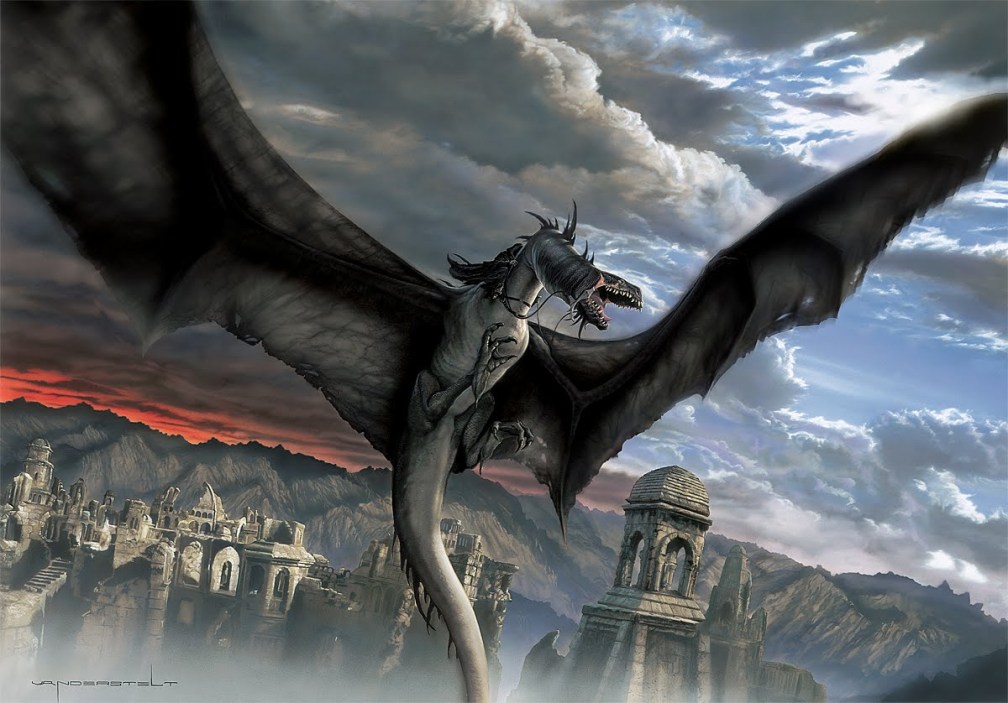
I was talking to a colleague the other day about movies, and he revealed to me that he and his roommate are making a concerted effort to watch The Lord of the Rings trilogy in its entirety for the first time ever. After I got over my initial shock that there still exist people in the world who haven’t seen these magnificent pieces of cinematic history, we started talking about some of the scenes he had seen so far (he hasn’t yet got to The Return of the King), his immediate impression of the characters and ideas within, and how he felt overall about the films.
He loved Gandalf, and how he straight up gets blazed with Bilbo right at the outset of The Fellowship of the Ring (I didn’t have the heart to tell him that Tolkien wouldn’t have meant it to be actual ‘weed’); he also told me how he was ROFLing at the Gandalf the Grey/Gandalf the White scene where he forces Saruman out of Théoden’s head, but that he nonetheless recognized it as an important scene.
One of the things my colleague revealed to me, however, was how it took him some time to get over the clichés of the movies, until he took a moment to recognize that virtually every medieval/fantasy film ever was in actual fact inspired by The Lord of the Rings, and that the clichés are there because it’s really the originator of so many of them. And he was thinking of it from a filmic perspective of the last two decades – never mind the near-century since Tolkien first started writing about Middle-Earth.
His enthusiasm, however, has made me want to revisit these epic films again (I usually watch the trilogy from start to finish at least two or three times a year) with a naive eye, if possible, and try to remember what it was like when I first saw them back in the early 2000s. Whilst some of the CGI has aged better than others (Gollum: yes; Legolas fighting an oliphant: no), and the more I watch them the more critical I become of everything – despite still loving them to death – there is to this day something magnificent, incredibly epic, and almost magical about these three movies that has (so far) transcended time and allows them to remain as one of the most unlikely successes of modern cinema.
But I find myself also – perhaps in anticipation of Amazon’s extended Lord of the Rings TV series – wanting to revisit a trilogy that has not done as well, and that I have certainly not watched as much: The Hobbit films.
Where the scenes that stick out to me in The Lord of the Rings are usually the ones that are epic, magnificent and truly grand, the ones that stand out the most from The Hobbit films are more often the ones that drag it down into an abyss from which even Amazon may struggle to rescue the franchise from: the barrel scene, or Legolas defying gravity, or even the fact that they completely failed to bookend the trilogy properly (it starts with a flashback from which we never actually return). Whilst some of the scenes are simply poorly adapted from the book, some of the more egregious and unforgivable parts include the love triangle between Legolas, Tauriel and Kili – two of which were never even in Tolkien’s original work.
That being said, I have a soft spot for these films – in descending order of softness as the films go on – partially because, like them or not, they’re what we have as a cinematic adaptation of one of the most beloved books in history, but also because I understand the difficulties and pressures that Peter Jackson et al were under to pull off something that even approached the grandiose heights of The Lord of the Rings trilogy: a foreshortened filming schedule, disastrous reshoots, cast and crew that were in despair of being unable to share sets with each other (Ian McKellen in particular was devastated that he was almost entirely alone in green screen for the entirety of the shoot), and a change of director halfway through all contributed to a project that Peter Jackson would later say nearly destroyed him.
Besides, if we can forgive Legolas surfing on piles of Orc corpses in The Two Towers and Aragorn and crew diving through cascades of skulls in The Return of the King, can we really object so strongly to a CGI orc that didn’t need to be in the film, or side plots that were extended beyond need just to fill time? There was plenty of silliness in the original trilogy, and plenty of deviations from the source material, and in some ways I would argue The Hobbit films are actually more faithful to the book: in order to flesh out three lengthy movies, there’s virtually not a single thing in the book that was omitted from the films.
At the end of the day, I still believe we’re fortunate to not only have all of The Hobbit and The Lord of the Rings adapted into high-budget films, but to have them done (in the end) by the same team of writers, producers and directors such that they at least have a consistent feel and tone, and feel very much like part of a single cinematic universe (something Marvel took a page from when creating their own magnificent cinematic universe). I don’t know how necessary Amazon’s billion-dollar TV series will feel when it eventually comes out, but I remain hopeful that it will take heed of these thoughts and make it feel like it fits with the films themselves (the fact that it’s being filmed again in New Zealand is a positive thing in this regard).
I think I may re-approach this set of films in the near future (hey, maybe even tonight!), starting with An Unexpected Journey and going all the way through to The Return of the King. This way I can get a feel for the entire story from start to finish, and still end on the strongest film of the six. I feel The Hobbit films deserve a second chance, at least from me, and I want to experience the good parts (the Misty Mountain song near the beginning of An Unexpected Journey, or the battle of wits between Bilbo and Smaug in The Desolation of Smaug) despite the worse parts, many of which I’ve broached already.
And of course, I feel for Peter Jackson. He’s personally one of my favorite directors, and not just because of his work on The Lord of the Rings; I adored his take on The Lovely Bones, and even the more recent Mortal Engines was a decent film, despite the logical fallacies of the entire concept, which of course is more to do with the original book than anything Peter Jackson did. I just think that his career and reputation were ruined by The Hobbit films, and it really wasn’t his fault; when he took over the helm from Guillermo del Toro, the studio refused to allow him any additional time for rewrites and reshoots, meaning some of it was filmed without even a basic storyboard.
What are your thoughts on the entirely of The Lord of the Rings cinematic universe? Do agree that The Hobbit films ruined it, or do you think that – for what they are – they should still be respected as the best cinematic adaption of Tolkien’s masterpiece that we likely will ever get?
 Satis Writes