The Redemption of Erâth: Book 3, Chapter 9

Chapter 9: The Crossing of the World, Part I

There was much work to be done in preparation for the voyages of Ermèn, Athalya and Brandyé, and it was some weeks before they were able to make their way to the port of Viura Râ in search of a vessel that would take them hence. Brandyé came to the conclusion that, as high a position as the Sarâthen held in the world, even they were not able to travel on a whim to whatever kingdom took their fancy, or to speak with whichever leaders they desired. (It did not occur to him that the Sarâthen might well be able to do so, but he could not.)

There was much planning to be done, also—planning of where they would go, with whom they would speak, and what they would say. Over the following weeks Brandyé learned much of the world of Erâth, and it was all of it new, and different to him. Deep in his mind he knew that his own experience of the world, remembered or not, was as nothing compared to what he was about to discover; entire lands and countries awaited him, vast oceans to be crossed, mountains to be scaled, and plains to be traversed, and he marveled at what unimaginable wonders he would encounter there. In this regard, he could not wait to be departed, and each day that dawned ached with anticipation.

Yet another part of him, however, remained silent and sad, and it was this part that spoke to him of the mysteries of the world, and that there would soon be far fewer left than ever before. Erâth had, until that point, seemed unimaginably vast, and the thought that they were to cross the entire world from end to end in a matter of months frightened him. It seemed to him almost that the world ought to remain vast, and that they should be able to bridge its farthest corners so easily spoke to him of just how advanced the world of men was here. He knew in his heart that such travel would have been utterly impossible in his past life, and he yearned for a larger world, one in which he was familiar with only a part.
Continue reading

Movie Night: The Matrix

Year: 1999

Director: Andy Wachowski / Lana Wachowski

Production Company: Warner Bros.

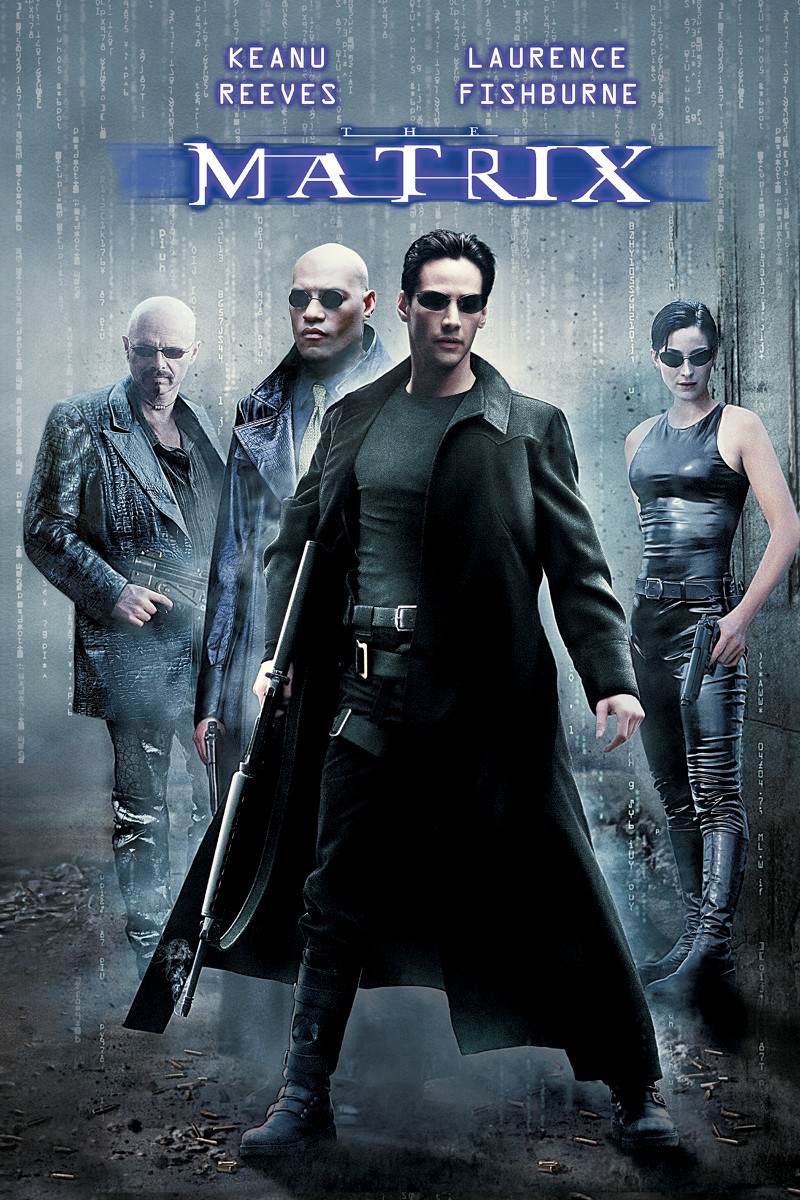
Leads: Keanu Reeves, Laurence Fishburne, Carrie-Anne Moss

The Matrix is one of those movies I’ve been waiting my whole life to share with Little Satis—waiting for him to be old enough to appreciate not only the spectacular special effects but the intensely mind-bending plot. It’s almost shame the Wachowskis decided to push what could have been a PG-13 rating to an R, just for violence, and I took a risk and let an eleven-year-old watch it.

(Full disclosure: Mrs. Satis actually let him watch it, without me—something I am rather ungrateful for. I had to watch it again with him.)

I’m glad I did, because it blew his mind.

Like Star Wars, or The Sixth Sense, it’s easy to forget how ingrained into popular culture The Matrix has become in the fifteen years since it was released. In 1999, the closest thing to it was 1982s Tron, and watching the original trailer, it’s easy to imagine that The Matrix was simply an updated version of that alternate-reality extravaganza:

There’s nothing in the trailer to reveal the mind-bending twist of The Matrix—a twist the sequels forgot all too soon. (See my post on trailers ruining movies.) In the slim chance that someone reading this post hasn’t yet seen it, I won’t give it away—like The Sixth Sense, you don’t talk about it—but the big reveal, with the red and blue pills, had Little Satis on the edge of his seat. His jaw dropped when he saw what came after.

The Matrix set the style for a lot of films to come, including the use of slow-motion (and pseudo-slow motion), CGI and deft camera work. The scene where Trinity jumps into the air, the shot freezes and the camera pans around to the other side, has become iconic.

The_Matrix_Trinity_Kick

In fifteen years, the effects are starting to show, of course—the wirework is telling, and the CGI is a little flat in places, but like the best envelope-defining films they were careful with their effects: as much is practical as computer-generated (something the sequels again forgot). The final fight scene between Neo and the agents is as epic as ever, and Neo’s Superman impression at the end leaves me with a grin to this day.

The Matrix earns its heavy philosophizing, with a plot that is as convoluted as its action sequences. Reloaded and Revolutions tried to go even deeper, but the cat was out of the bag at that point: we knew what the Matrix was, and there really were no surprises left (the ending of Reloaded feels very second-best). This is one of those films that probably didn’t need a sequel at all, and although I will watch the sequels with Little Satis, I probably won’t write them up on here.

If you haven’t seen The Matrix, you need to go watch it now. If you have … go watch it again. You won’t regret it.

★ ★ ★ ★ ★

Featured image taken from http://www.rottentomatoes.com/m/matrix.

Screen Shot 2015-01-07 at 6.46.37 PM

Thought of the Week: Supporting Independent Artists

I’d like to introduce you to a favorite music genre of mine: doom metal. If you haven’t heard of it, don’t worry—it’s not the sort of music that’s likely to show up on the Billboard Top 100 any time soon. You have to hunt for it, though not too far—there’s a lot to be found. The incredibly dedicated website doom-metal.com has nearly 2,000 bands listed that classify as doom metal of some kind.

Doom metal itself has its roots in the late seventies/early eighties, and is defined by Wikipedia as:

… an extreme form of heavy metal music that typically uses slower tempos, low-tuned guitars and a much “thicker” or “heavier” sound than other metal genres.

Doom metal can be split into a variety of sub-genres (sub-sub-genres?), including (again according to doom-metal.com) atmospheric doom, death doom, epic doom, funeral doom, sludge doom and stoner doom. Many of these have overlapping elements, and I wouldn’t blame the uninitiated for failing to understand how funeral doom can have death metal elements, yet not be classified as ‘death doom’. In fact, to the untrained ear most doom metal would likely sound similar: heavy guitars, thumping bass, and comparatively slow tempos.

Continue reading