Tales of Despair: Falling Through the Roof

October 2nd, 1988.

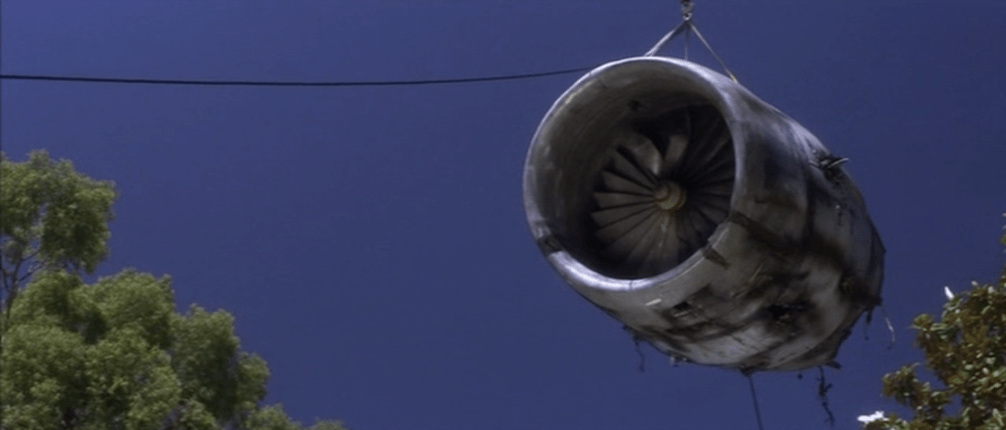
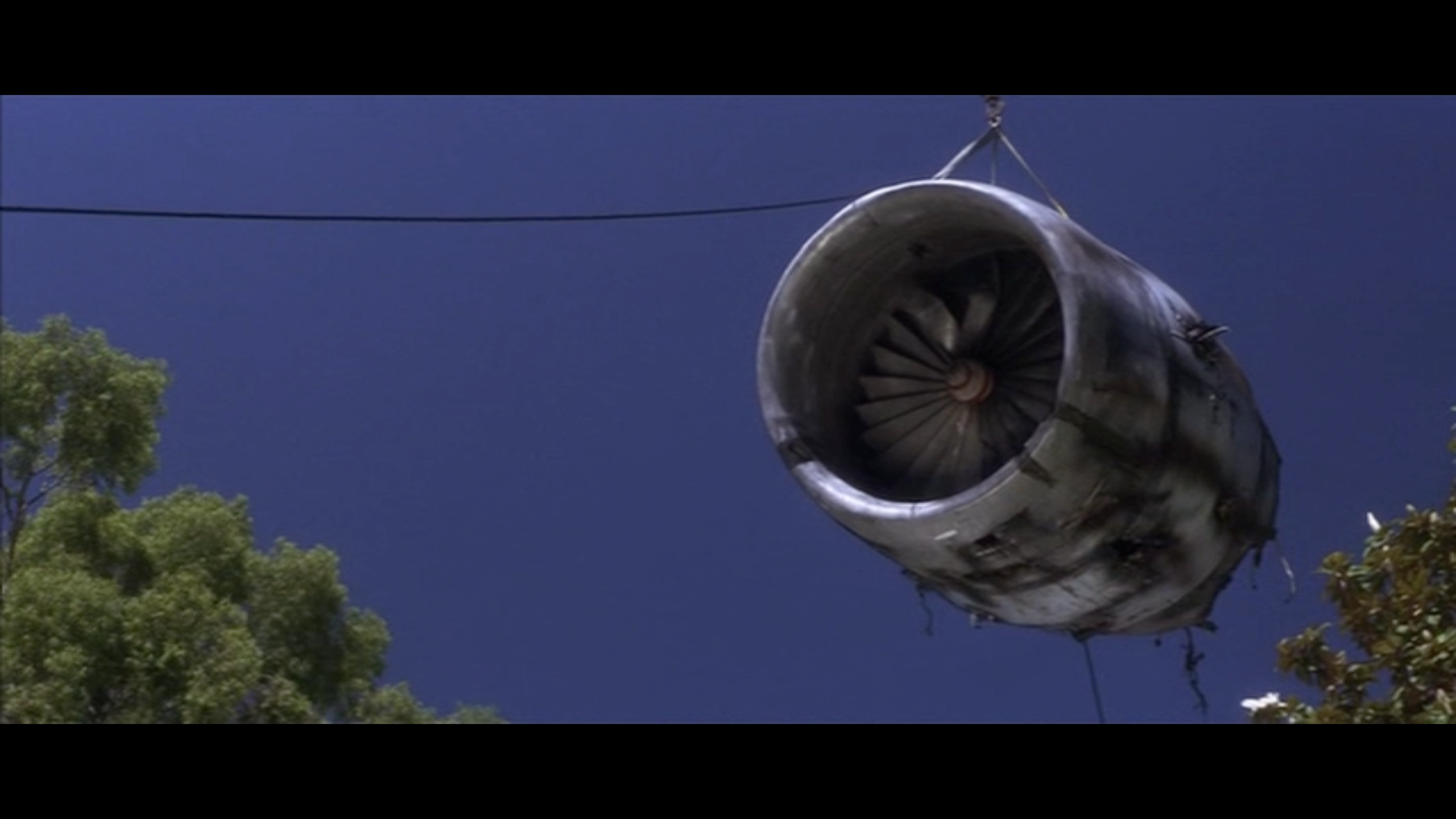
An airplane engine falls through the roof of a teenage boy’s home, and should have killed him: should have, had he not been lured out of the house by an enormous rabbit.

Sound familiar? Then you’ve probably seen Donnie Darko. It is a masterpiece of dark cinema, a mind-bending trip into the world of insanity, and it does so in the most realistic of ways: by making the insanity appear sane. For ultimately, this is what we think, isn’t it, those of us whose grip on reality is tenuous? It’s the world that’s gone mad.

The rabbit plagues Donnie; the rabbit tells Donnie the world is going to end in twenty eight days, six hours, forty-two minutes and twelve seconds. And oh, Jake Gyllenhaal does such a good job of believing it, never doubting it, and descending into the madness that comes with the freedom of knowing it’s all going to end. Yet all the while, we remain rooted firmly in the real world. School goes on; work goes on; life goes on. The rabbit is an illusion; the rabbit is real.

Certainly, the world doesn’t seem like it’s going to end. Nor does it for any of us, of course. Almost certainly, when the end does come, it will be abrupt, it will be instant, and we won’t know any different. But Donnie…oh, Donnie knows.

And it is despair that comes with this. The knowledge that any thing, any action, is meaningless. He burns down the principal’s house, and it is meaningless. A vile secret is unearthed because of it, and it, too is meaningless. He falls in love…and it is meaningless.

The story behind this film unravels the very nature of what is real and what isn’t, and in a very Descartian way dissects the meaning of armageddon. For if we end, the world ends, and there is no way of knowing otherwise. It is an end of life, an end of existence, and most importantly, and end of self.

And in the face of this ending, the destruction of self, Donnie is given a choice, and the choice is this: to let the world end…or to let the world end.

Few people will be given the chance to learn of their death before it comes. Fewer still will make the choice to roll over in bed, and let the engine fall through the roof.

Thought of the Week: Them’s Fightin’ Words

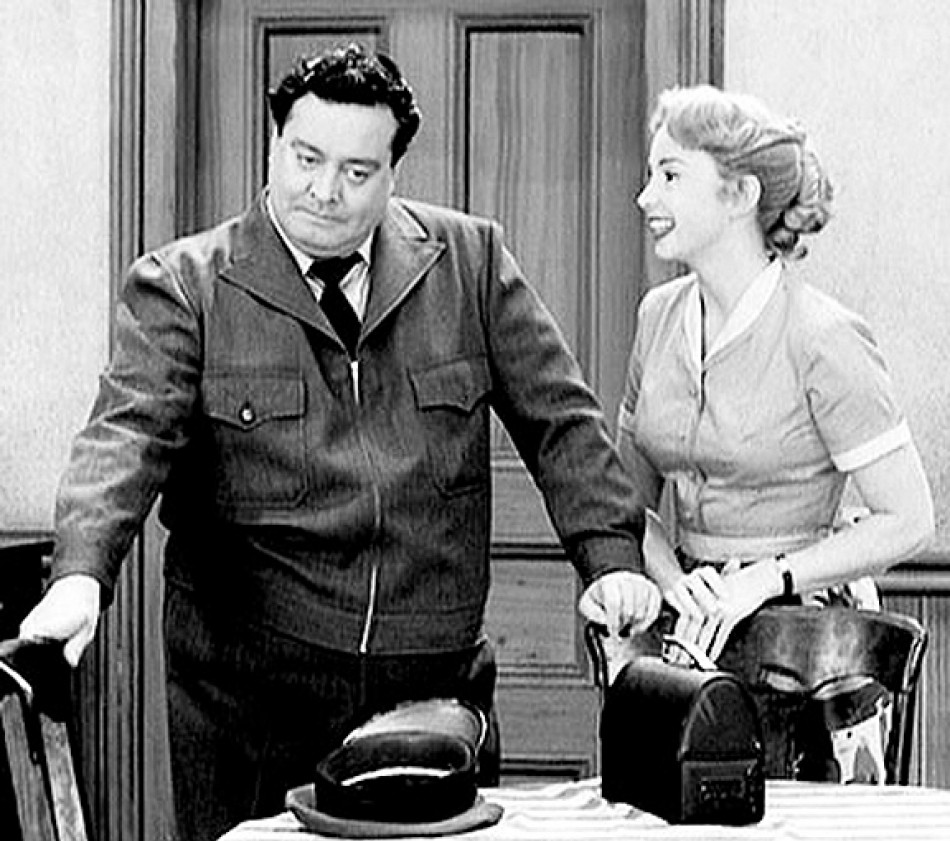
I sort of need to make it abundantly clear from the outset tonight that I love my wife very much. Just so you know, sweetie.

My wife and I have known each other for almost ten years. It’s the longest either of us have been in a relationship, which is either very encouraging, or incredibly depressing (depending on how you look at it). There’s a lot we’ve learned together, not the least of which was how to raise a child. I’ll boast a little here and say I’ve probably done most of the learning: I’ve learned to cook (badly), I’ve learned to clean (badly), I’ve learned not to leave the toilet seat up (mostly), and I’ve learned it’s not okay to steal the covers back in the middle of the night, even in February.

My wife has learned that I can be a real jerk (too often).

I’ve learned that my wife should matter more than myself (she already knew that). I’ve also learned that shoulds aren’t necessarily dos, and that there’s a lot more learning to go. I should wipe the stove; I should turn the lights out when I leave the room; I should massage her feet every night.

I should.

And hey – there are times I do these things. Usually I don’t do them very well (except for the light thing, that’s kind of black and white (ha!)), but I do try to do them. Now trying, of course, just isn’t good enough, as my wife knows, so I’ll keep trying harder. Some day I may actually succeed!

Yet…I feel there is one thing I have not learned, and – sorry for this, sweetie – I don’t think she’s learned either, which is this: to not take each other’s frustrations personally. We fight, we do. We fight a lot. I kind of don’t have much of a reference for this, but I hear that most people don’t quite fight so much. And I start wondering why.

I am usually exceptionally good at understanding other people, establishing empathy and predicting their behavior. I am, by my trade, an excellent listener and verbal communicator. I can express concepts simply and clearly, and I can make people feel good about bad situations.

So why do my words fail me with my wife? Why do I end up screaming at the top of my lungs at the person I should love above all others, about…freakin’ blinds?

(Why, for that matter, do my powers of self-analysis equally fail me when I try to figure these things out?)

All I can think is this: when my wife says something critical of me, I feel hurt; I feel devastated. When someone at work says the same thing, I am able to take it at face value, respond in kind, and learn from the experience. With my wife…I either imitate a hedgehog or the Incredible Hulk.

The irony is that I believe she gets frustrated just as equally, but at something entirely different: my lack of ability to listen to, and act upon, her critiques. Can anyone see the cycle here yet? It is a personal affront to her – an insult, even – for me to forget to take out the garbage when I told you to last night! If you see what I mean.

So where to go? What to do? I love her; she (should) know that. She loves me, and I (should) know that, also. But when I piss her off, her response pisses me off, and that response pisses her off, and before you know it we’re in a free-for-all piss-fight and I explode out of my shirt and leap through the roof (in actuality, I can be quite scary).

I suppose ultimately, I just want to feel listened to. Uh…I guess she probably feels the same.

So when can we talk?

Tales of Despair: Wyndham’s Apocalypse

Does anyone remember John Wyndham? His post-war novels set the stage for science-fiction to come, and despite H.G. Wells‘ prescient War of the Worlds,  he is known to this day as the godfather of the disaster novel.

The influence of his seven stories of terror and disaster have been felt across time and medium, being seen in future novels and films for decades after his lifetime. In particular, his first three novels, The Day of the TriffidsThe Kraken Wakes and The Chrysalids set the stage for apocalypse and disaster, and the strength of human survival in the wake of mass disaster.

Imagine the terror of waking, blind in a hospital, to nothing. No sound, no smell, no sight. Wandering through the streets of London, and discovering that every other person in the great city is equally blind. Some run in fear; some capture the few sighted in violence. Many are dead. All civilization is crumbling around you.

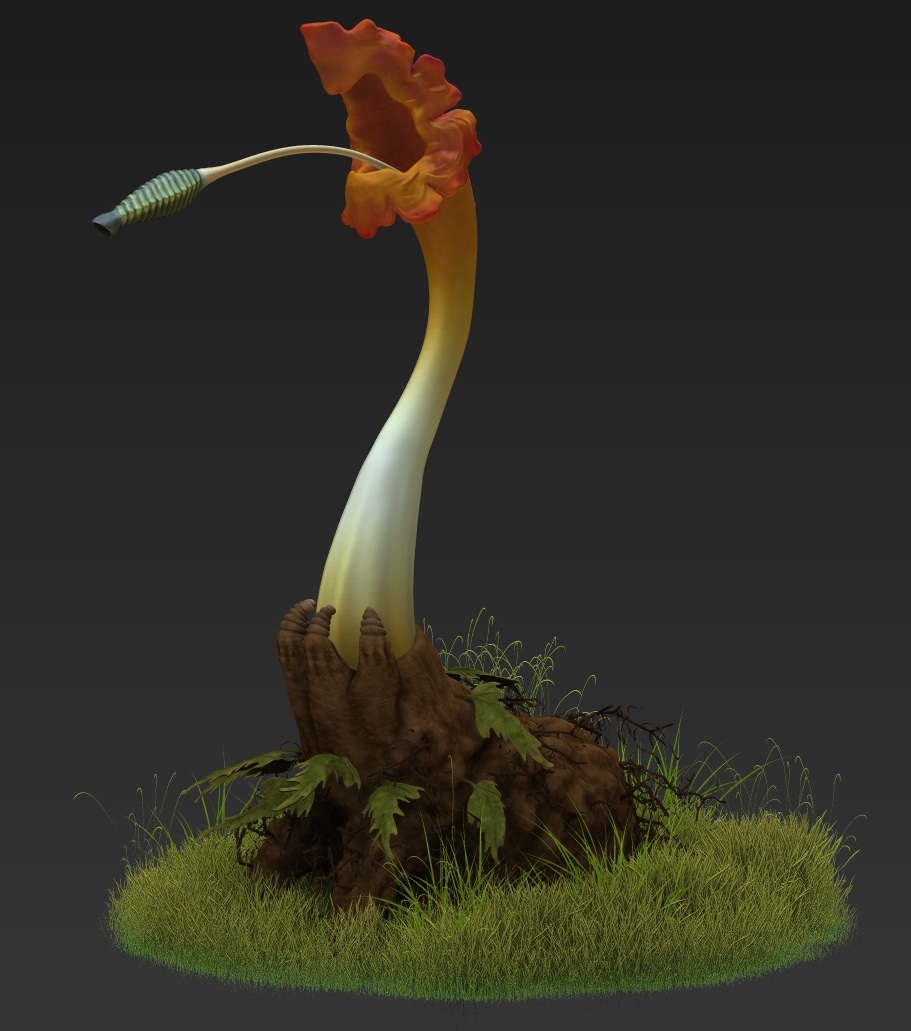
Then, quietly and in the distance, the whisper of monsters approaches. Towering, flesh-eating monsters that ought never to have been released. That ought not to exist. That ought not to be able to move, for they are plants. Yet move they do, and their advantage is great, for among the blind, they sense the movement of the frightened, and strike them down. Poison, stings, death and rotting flesh. Tearing humans limb from limb.

The 2002 film 28 Days Later… pays homage to this brilliantly, with Jim awaking in a hospital to the sound of silence. Stunning scenes of entirely empty London streets reflect the confusion and fright of Bill Masen, suddenly thrust into a twisted reality from which there is no waking, no escape. The fight for dominance among the few survivors parallels the dictatorial colonies of Wyndham’s post-apocalytic vision.

Paramount to these tales is the gut-wrenching realization that there is no return to normality. The world as we know it is gone, and the primal laws of evolution rise: the survival of the fittest. The weak die; the world diminishes. Hope is forsaken, and the sole thought is to make it to the next dawn.

When I first read these stories as a child, I was terrified; I saw tendrils of barbs and poison pushing gently at my window in my nightmares, insidious and threatening. I saw movement in the bushes walking home from school, and ran past the rhododendrons in fright. I haven’t read the novel again since.

However, the most heartbreaking tale of strife remains, to me, The Chrysalids. Here, the apocalypse is long-gone, and the survivors have settled into a rural, medieval society, where preservation of the normal is the law of the bible, and the deviants are hunted down and destroyed. Deviants, however, are abundant. Some are hideously deformed; some are barely noticeable. A single extra toe is cause for banishment and death. And in this setting, a new strain of human comes into being: ones who can sense the thoughts of others. The horror of being driven out by one’s own parents dominates the mood of the story, and I cried bitter tears when David, Rosalind, Petra and the others – mere children, naive and alone in the world – are gradually discovered and hunted in violence by their own families.

Wyndham had his finger firmly on the pulse of despair and hopelessness, inspired perhaps by his horrific experiences in the war, including the storming of the Normandy beaches. Such visions are indelible, and it is possible that these novels were his catharsis; the only way he knew of exorcising these demons.

His terror, his fright and his visions of destruction have inspired generations of creative artists; the world is fortunate to have had such a bleak storyteller.