Douglas Adams on Tea

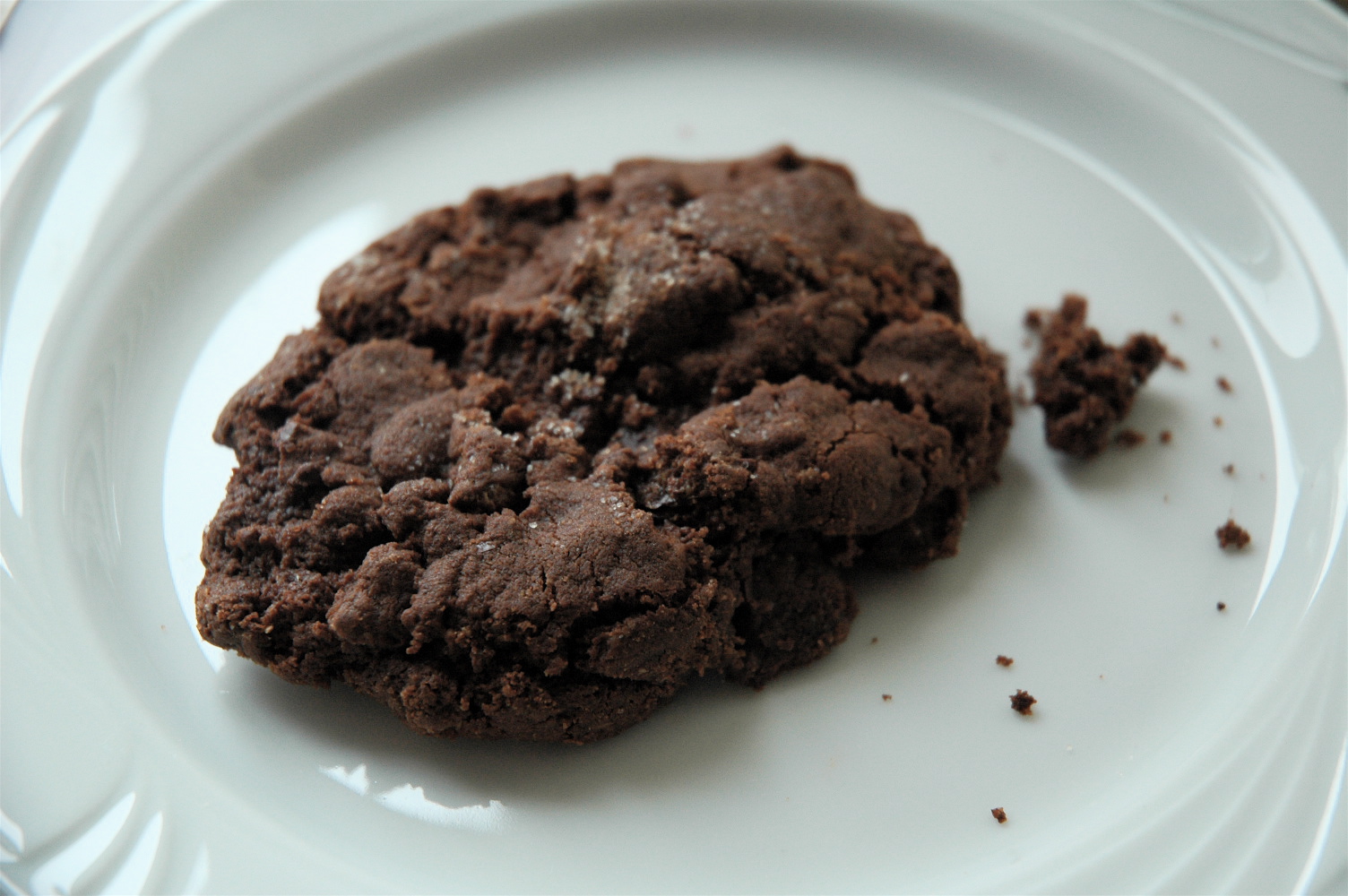
Yesterday, I ate a small chocolate egg and it gave me a throat infection. It isn’t very nice, and put a bit of a damper on the last day of our friends’ visit from England.

In fact, it seemed a little weird that the egg should make me sick, so I consulted with my biologist wife, who confirmed that I likely had a virus/bacteria already colonizing the wetlands of my esophagus, and the sugar from the egg was like rain after a drought – they just ate it all up, and then made lots of nasty germ babies.

Anyway, the upshot of it is that I’ve been eating very little, and drinking lots and lots and lots of tea. I like tea; I usually poison myself with coffee most days, but only because it gives me a swifter kick up the ass. Tea is good at night, and good in the morning, and…well hell, it’s good pretty much all the time.

All this thinking about tea, coupled with our delightful British friend who drank somewhere between five to ten cups a day while she was here, got me thinking of what Douglas Adams had to say on the subject, and since it felt pretty relevant right now, I thought I’d share it with you all.

As a side note, I have no idea how copyright plays into this; I’ll give all due credit, and if someone asks me to take it down, so be it.

Tea

One or two Americans have asked me why the English like tea so much, which never seems to them to be a very good drink. To understand, you have to make it properly.

There is a very simple principle to the making of tea, and it’s this – to get the proper flavour of tea, the water has to be boilING (not boilED) when it hits the tea leaves. If it’s merely hot, then the tea will be insipid. That’s why we English have these odd rituals, such as warming the teapot first (so as not to cause the boiling water to cool down too fast as it hits the pot). And that’s why the American habit of bringing a teacup, a tea bag, and a pot of hot water to the table is merely the perfect way of making a thin, pale, watery cup of tea that nobody in their right mind would want to drink. The Americans are all mystified about why the English make such a big thing out of tea because most Americans HAVE NEVER HAD A GOOD CUP OF TEA.  That’s why they don’t understand. In fact, the truth of the matter is that most English people don’t know how to make tea anymore either, and most people drink cheap instant coffee instead, which is a pity, and gives Americans the impression that the English are just generally clueless about hot stimulants.

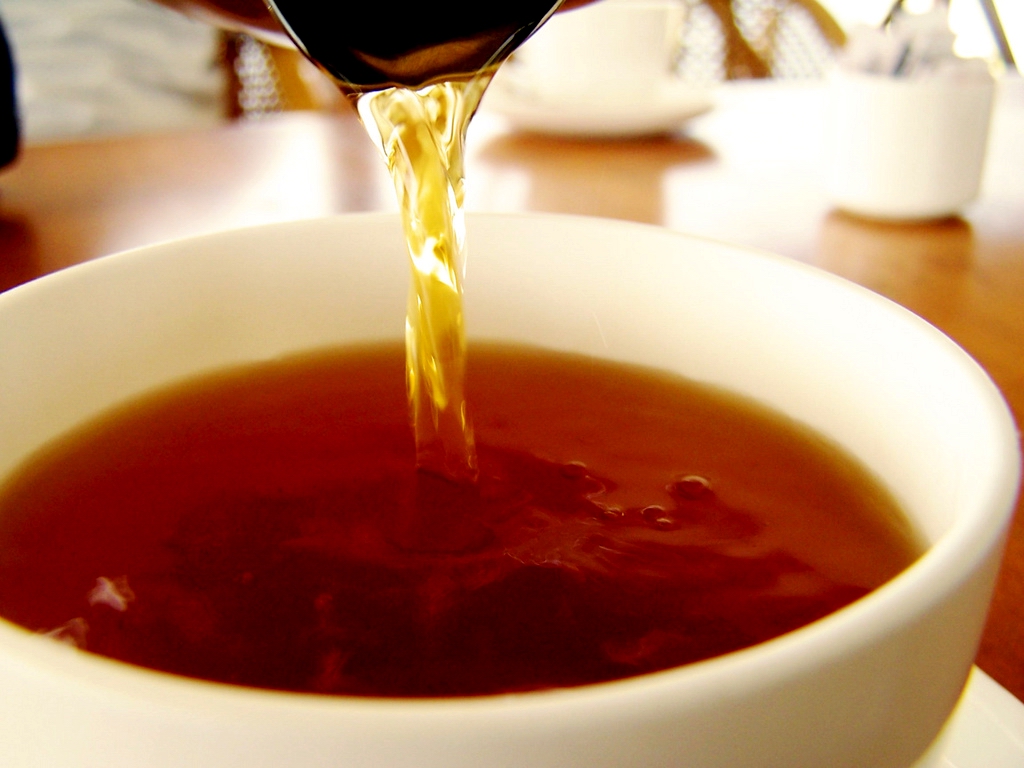
So the best advice I can give to an American arriving in England is this: Go to Marks and Spencer and buy a packet of Earl Grey tea. Go back to where you’re staying and boil a kettle of water. While it is coming to a boil, open the sealed packet and sniff. Careful – you may feel a bit dizzy, but this is in fact perfectly legal. When the kettle has boiled, pour a little of it into a teapot, swirl it around, and tip it out again. Put a couple (or three, depending on the size of the teapot) of tea bags into the pot. (If I was really trying to lead you into the paths of righteousness, I would tell you to use free leaves rather than bags, but let’s just take things in easy stages). Bring the kettle back up to the boil, and then pour the boiling water as quickly as you can into the pot. Let it stand for two or three minutes, and then pour it into a cup. Some people will tell you that you shouldn’t have milk with Earl Grey, just a slice of lemon. Screw them. I like it with milk. If you think you will like it with milk, then it’s probably best to put some milk into the bottom of the cup before you pour in the tea*. If you pour milk into a cup of hot tea, you will scald the milk. If you think you will prefer it with a slice of lemon, then, well, add a slice of lemon.

Drink it. After a few moments you will begin to think that the place you’ve come to isn’t maybe quite so strange and crazy after all.

* This is socially incorrect. The socially correct way of pouring tea is to put the milk in after the tea. Social correctness has traditionally had nothing whatsoever to do with reason, logic, or physics. In fact, in England it is generally considered socially incorrect to know stuff or think about things. It’s worth bearing this in mind when visiting.

Taken from “The Salmon of Doubt”, published 2002 by Macmillan

Original text written May 12, 1999

© Completely Unexpected Productions Ltd. 2002

And that’s how I’ve been drinking my tea for the past few days. Thank you, Douglas.

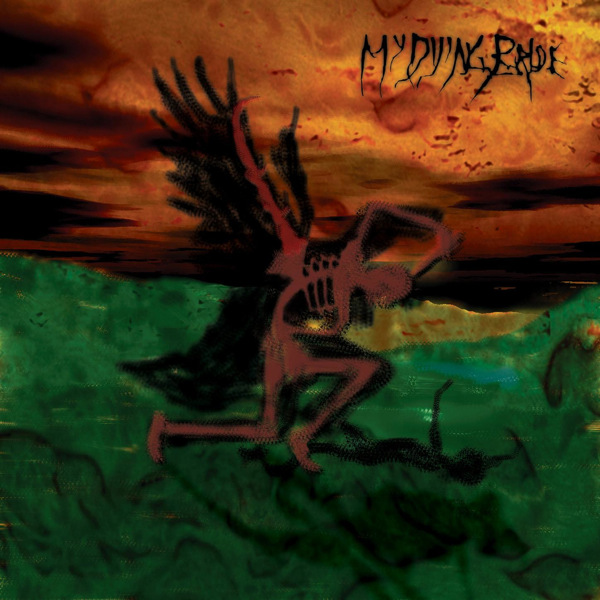
Tales of Despair: My Dying Bride and the Destroyer of Hope

Weeping with you. Arms around them
Flowing with you. Without your men
Keeping with you. Feeling their shiver
Drowning with you. Deep in this river

Tired and lonely. Sitting and staring
Weak and filthy. No longer caring
Wasting to nothing. The rubble of you
Hoping for something. Poison where love grew

People. Feel her mind
She is broken
People. Fill your eyes
Her body is broken

Leave me be, with my memories
I can still see all the lovers of me
I still know those feelings

You’re still mine, my lover
I watch over you
Goodbye my lover
No sorrow. Please, no tears

Holy and fallen. Watch yourself die
Fade and wither. Long lost the fight
Tremble to sleep. Her man long gone
Years, and still weeps. Never forgotten

My Hope, the Destroyer

© 2001 My Dying Bride

It would be impossible for me to write of despair without at least mentioning the beautiful and doom-laden music of British band My Dying Bride. From a musical point of view, there is little else in all the canon of recorded music that is so inspiring of – and inspired by – despair and misery. Over the past twenty years, My Dying Bride have filled the world with misery, in a series of beautifully recorded and artfully written albums and songs. The mastery of these albums is, as much as the musical style itself (slow, morose, often heavy, with achingly tragic vocals), the imagery dredged up by their dark and evocative lyrics. Though they rarely tell a story (The Light at the end of the World is a wonderful exception), the visions painted by these terrible words have endured in my mind for years, and it is these I would share with you.

“My Hope, the Destroyer” is a part of their 2001 album The Dreadful Hours, and is the culmination of an hour-long soundscape of doom. Metaphor and reality blend interchangeably, and from the opening strings, a scene of such utter bleakness is painted that it blackens the very world around you:

There is a man, eyes red and swollen with many tears, arms out to a soul that is not there. In a room, dimly lit, he feels himself drawn ever deeper into a corner of blackness, and the world above fades into utter nothingness. So has he been for days, and now he has not the strength to crawl of the unlit void into which he has been carried away. Voices pass around and over him, and they are distant, unheard and meaningless. Their sound is cold, and bring no comfort.

As this man is ever drawn down a stream of unconscious and black, twisted claws of despair rise from the deep, and he comes to pieces, and is undone. In this dying, he sees his woman, in white on a ground of black stone, stained in red, and the bleak faces of people and demons gather and stare. He is there, again, and in his arms she is lifeless. In the rain, the gray and the red above, the twisted faces of the past stare down, and mock him.

He is carried away on the sea of ink, and there is a stone, upon it a word, and below it a death. The tree above is leafless, and the raven does not move. Water drips on the stone, and it is not rain.

And in the fading twilight of his life, his every thought has ever been bent upon this moment, and turning back on a life of many years, all hope failed that one night, and tears have filled all the nights since.

Such are the scenes in my mind, every time I hear this song, and I am given to wonder – what tragedies inspired music of such despair?

On the Nature of Selflessness

Note: Thanks to alexandracorinth for the inspiration for this post.

I want to propose a mildly radical concept. I do not believe there is such as a thing as selflessness. All humans are selfish.

Before you cry out in indignation, I want to acknowledge every selfless act you have ever done. Every time you allowed someone else to take the last chocolate truffle. Every time you didn’t buy a new pair of shoes, even though you really, really wanted them, because your boyfriend was worried about money. Every time you bit your tongue and allowed a friend to believe they convinced you of their opinion, even though you know they’re completely full of crap. Every time you’ve ever donated to charity.

I want to acknowledge your efforts in all of this, because it’s all a lie.

We are raised (at least in Western society) to believe that selflessness is the epitome of culture and manner. We serve others before we serve ourselves at dinner, and we stand to allow older folk to have a seat on the bus. Some of these things have been ingrained in our nature from a very early age, and are very nearly subconscious. Some things, however, are more difficult to reconcile; we might forego applying for a promotion at work, because our best friend also wants the same position. We might give up every friend and joy of a home town, because our spouse wanted to move to a different country. We might put ourselves in a position of danger, so that our loved ones might not be.

At the heart of all this is the notion of sacrifice. Ultimately, all acts of selflessness are the result of the deliberate abstaining of something we desire, for the sake of another person or entity. Perhaps it is an object or toy; perhaps a location or person we love. We may even make that ultimate sacrifice, and lay down our own life. The impetus behind this is the same: we are willing to give up something we desire, because we feel there is something else that is more deserving.

Yet why do we do this? Where on earth does this sense of altruism come from? Evolutionarily, it doesn’t seem to make sense; in a simplified way, the great natural law ‘survival of the fittest’ goes completely against this grain. If you have ever watched birds scrabbling for breadcrumbs, you would recognize this: not a one of them is willing to give up a tasty morsel for a compatriot. The very nature of survival presumes the endurance of the most selfish; the one who can eat the most, endure the most, procreate the most and live the longest, ensures the preservation of their genes into the subsequent generation.

Yet is this always the case? There can also be found examples in the wild of what we would call altruism; a mother cat might die in defense of her kittens. The reason here seems perhaps obvious – her genes have been passed on to the next generation, so there is now little reason for her continued survival. Would she die in favor of her mate, however? Perhaps not. Wolves in a pack might share a kill with each other, even if an individual has not filled their belly. Again, survival is at work here; wolves live by necessity in a pack, and the survival of one is inherently linked to the survival of all.

So what of human sacrifice, then? Outside of our race, there is little evidence for altruism that does not directly further an individual’s survival. Yet there are examples of people who would give up items or values of considerable cost, sometimes for the sake of complete strangers. Where does this come from?

In much the same way that a wolf must live in a pack, so must humans live in society. Our race has evolved to the point where it would be nearly inconceivable for an individual to survive without any other person at all. We rely on each other for food, for clothing and for shelter; we rely on each other equally for emotional survival – for love, friendship, and counsel. It could therefore be argued that there is a very strong human drive to ensure the survival of our people in general, even at the sacrifice of ourselves as an individual.

It is possible, even, that it is from this basis that the very concept of morals arises. What defines ‘good’ and ‘bad’? Again in evolutionary terms, ‘good’ represents survival, of either individual or society – ‘bad’ represents the opposite. Thus, killing is bad; children are good. Yet killing bad people is often be considered good; ridding society of those who would destroy it is a strong survival trait. This instinct as produced a strong reward in us; we feel good when we do good.

And so this relates to selflessness. When we sacrifice something we care for, we convince ourselves we do it for the benefit of others. Yet the subconscious is at the same time rewarding us – we feel good for our sacrifices. This in turn leads to the thought that, in fact, every decision we make is based on the outcome we believe will make us feel better about ourselves.

And therein lies to falsehood of selflessness; if each decision we make is ultimately for our emotional benefit, then could we not be considered as being ultimately selfish? Consider a simple scenario: you are at a party, and there is one last cookie on a table. You could take the cookie and eat it, because you want it, or you could leave it for another to take. Take a moment to think about what you would do; then take another to think about why. Then – take a third moment to think about your reason. If you eat the cookie, it is ultimately because your desire for the cookie outweighed your desire to be nice to others. If you leave it, the converse is true. One or the other does not make you a bad or a good person; it becomes a simple matter of choosing the path we can most easily live with the consequences of.

This is a terrible thought to consider, in a way, yet comforting at the same time. Every act of self-sacrifice we have have ever made was in fact driven by the subconscious desire to feel good about ourselves. Every act of selfishness was driven by exactly the same force. Ultimately, whatever path you choose, it will be the one that benefits you: if not corporeally, then emotionally. In this, then, there is perhaps little difference between altruism and selfishness – merely our perception of the result.

In a nutshell, you ask? Okay, here goes: don’t feel bad when you are selfish, because you are just as selfish when you are selfless. And so is everyone else. So there.