Tales of Despair: Perversity

The grunts of his sister and her clients ring loud through the thin partition. Emile hates her as he hates all women; women have only ever spurned him.

Later, her lover beats him, and then invites him to eat with them. Irma will not stop him, though she tends to her brother when he is gone.

Bebert does not like him, and is satisfied when Emile squirms. In the end he will stab Emile in front of his sister. Again, she will not stop him.

Emile will buy a gun, and will desire Bebert’s death; it isn’t his that comes.

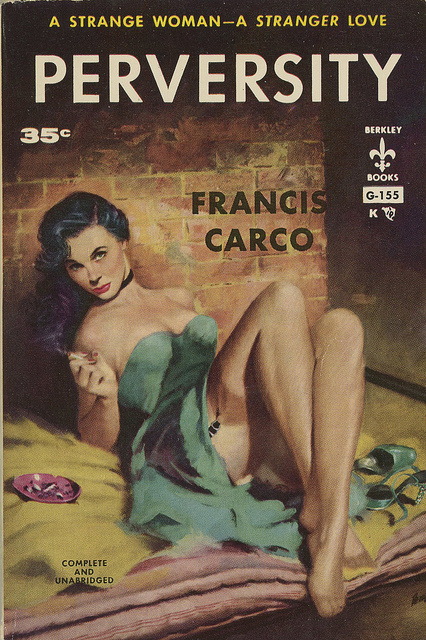
Such are just some of the scenes that bring to life Francis Carco‘s (1886-1958) frankly stomach-churning painting of 1920s Parisian slums, Perversity (French: Perversité). The story is bleak and desperate, centered around three loathsome characters and filled with little hope. Emile is a clerk, unable to function without the reassurance of strict routine. Irma is a prostitute, working from her bedroom in the tiny, two-room apartment she shares with her brother. Bebert is the bully of the tale, lording ownership over Irma and taking great delight in the torment and abuse of Emile.

What is particularly unsettling about Perversity is Carco’s unflinching dedication to the deeply disturbing faults he has built into his characters, and he allows them no redemption. Emile and Irma are pushed to edge of human decency, and repeatedly make decisions that seem against the very grain of morality, yet each time we are left with the knowing that there was, of course, no other way it could have been. One of the most discomfiting scenes occurs half-way through the story, when Bebert walks in to find Emile and Irma talking together. As Emile shrinks away from him, his sister points out that he is afraid of Bebert. Rather than allowing his characters to escape  with a mere argument, Carco builds a tension so great that it is only finally released when Bebert brings out a pocket knife and stabs Emile repeatedly, smiling all the while and insisting that such ‘pricks’ don’t hurt at all, and he shouldn’t act as such a baby. When he is finally finished and allows Irma to bathe him in salt, she comes to him and tells him that Emile is bleeding profusely. His callous response is that such a thing is “quite natural, I assure you. It’s rather the contrary that would astonish me.”

I have read no other book that so encapsulates the despair and hurt of inescapable depression, and forces it on the reader without sympathy. This is a terribly uncomfortable read, and I found myself unable to continue at certain points, often for weeks at a time. Ultimately, it was a rewarding experience, for it is a tale that draws you in and does not let go. The uniqueness of this story is that it is not tension, fear or suspense that hooks its teeth into you, but rather the grim, hopeless lives of these three people who have no reason to live, yet push on regardless in spite of the filth and the pain.

Perversity is available in print and for Kindle on Amazon. Read it at your peril.

Tales of Despair: The Road and the Unhappy Ending

There are so many creations in the realm of literature and art that draw inspiration from despair that they have, in some areas, grown a cult of their own. Entire genres are dedicated to these themes, and as far back as Shakespeare people have been fascinated by fate and the tragic ending. Macbeth is a perfect example of a tale which is very much doomed from the start – from the very beginning, we know there is no hope left for this man, and we follow him powerlessly to his doom.

In most areas of art, the artist is mostly, if not entirely, in control of their work. This allows a great freedom to take the story where it leads, regardless of the end. As a storyteller, it is with great relish – though also with great pain – that we can put our characters through a hell they sometimes don’t survive. Tolkien allowed Frodo to be scarred, physically and mentally, for the rest of his life. Orwell provided no escape for Winston Smith, and in the end he was powerless to stop himself from being reintegrated into the society he so hated. Stephen King is a master of the ability to push the darkness of a tale past the point of no return, whether it is Louis Creed graphically losing his son early in Pet Semetary and eventually driving him to insanity, or Paul Sheldon losing his entire leg to Annie’s madness in Misery. These are things that can’t be recovered from; for these characters, there will be no happy ending.

Yet there is one artistic medium in which it is much more difficult to avoid the inevitable ending upturn, and that is film. Particularly in the large-budget Hollywood industry, revenue is all-important in recouping the cost of developing the film, and the story ultimately falls to the demands of the crowd. In the end, most people just don’t go to the movies to feel bad.

What ends happening is that, with the exception of those few movies that are actually based upon novels (see the Stephen King examples above), it is almost impossible to find a movie that is willing to commit to the permanent destruction of their characters, and refuse to relent even at the very last moment. As scary as horror movies are, someone always survives. As moving as dramas are, someone always wins an insurmountable struggle.

Occasionally, you will come across a movie that goes halfway, and doesn’t quite provide quite the satisfying ending you might expect. Donnie Darko does this well – certainly not a happy ending, but one that somehow resonates nonetheless with a just fate. There are bittersweet endings, such as in Toy Story 3, with a conclusion we know is coming from the very beginning, yet somehow don’t want to face.

But there are very few movies that have the guts to go the full distance. In the end, there are few that can claim this credit as a stand-alone film (American Beauty springs to mind as an exception), but even in novel adaptations, the temptation to veer from the story can be overwhelming.

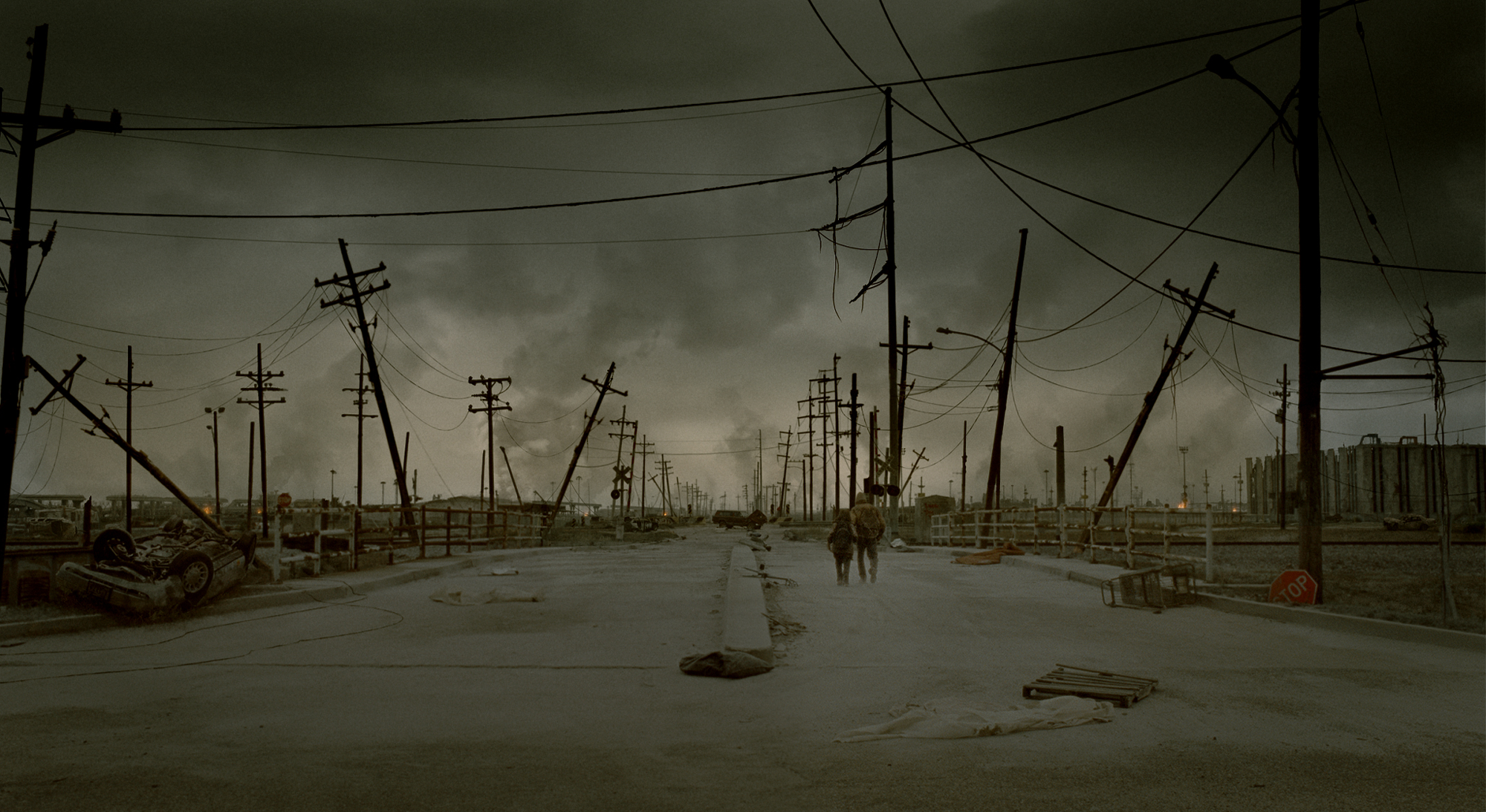
The Road, however, is not one of these. It is in every possible way as bleak and terrible as the novel it was based on, and doesn’t stray from its course even at the final stage. In a way, the shattered world in which our characters live give us little reason for hope form the outset, but a vast canon of apocalypse tales (thank you, John Wyndham) has taught us that at least some sort of redemption awaits at the end. At first, we want to believe that salvation may, in fact, lie at the coast, despite there being no evidence other than the father’s words. When the father becomes ill, we expect this as the twist, the seat-edger. What happens from there, however, is the push too far that casts the whole story into despair. There is no redemption, and even as we watch the boy watch over his father’s body, there is still some tiny hope that maybe we’re wrong, and that he’ll come back.

This ending has earned The Road the dubious accolade of being my favorite movie I would never want to see again. I fell in love with it visually from the very first scene, and the impeccably executed plot was riveting. But as a father, the ending cut a little too close to home, and I watched the credits roll through a pretty thick veil of tears. I want to watch this again…but perhaps not any time soon.

In the end, of course, we are allowed at least a brief reprise from despair in the form of the family that take the boy in. Yet they are a poor substitute, and the genuine love and caring the boy has lost in his father is irreplaceable. Ultimately, the closing message seems to suggest that kindness itself is irrelevant; in a world such as this, there is truthfully survival – or death.

Tales of Despair: My Dying Bride and the Destroyer of Hope

Weeping with you. Arms around them
Flowing with you. Without your men
Keeping with you. Feeling their shiver
Drowning with you. Deep in this river

Tired and lonely. Sitting and staring
Weak and filthy. No longer caring
Wasting to nothing. The rubble of you
Hoping for something. Poison where love grew

People. Feel her mind
She is broken
People. Fill your eyes
Her body is broken

Leave me be, with my memories
I can still see all the lovers of me
I still know those feelings

You’re still mine, my lover
I watch over you
Goodbye my lover
No sorrow. Please, no tears

Holy and fallen. Watch yourself die
Fade and wither. Long lost the fight
Tremble to sleep. Her man long gone
Years, and still weeps. Never forgotten

My Hope, the Destroyer

© 2001 My Dying Bride

It would be impossible for me to write of despair without at least mentioning the beautiful and doom-laden music of British band My Dying Bride. From a musical point of view, there is little else in all the canon of recorded music that is so inspiring of – and inspired by – despair and misery. Over the past twenty years, My Dying Bride have filled the world with misery, in a series of beautifully recorded and artfully written albums and songs. The mastery of these albums is, as much as the musical style itself (slow, morose, often heavy, with achingly tragic vocals), the imagery dredged up by their dark and evocative lyrics. Though they rarely tell a story (The Light at the end of the World is a wonderful exception), the visions painted by these terrible words have endured in my mind for years, and it is these I would share with you.

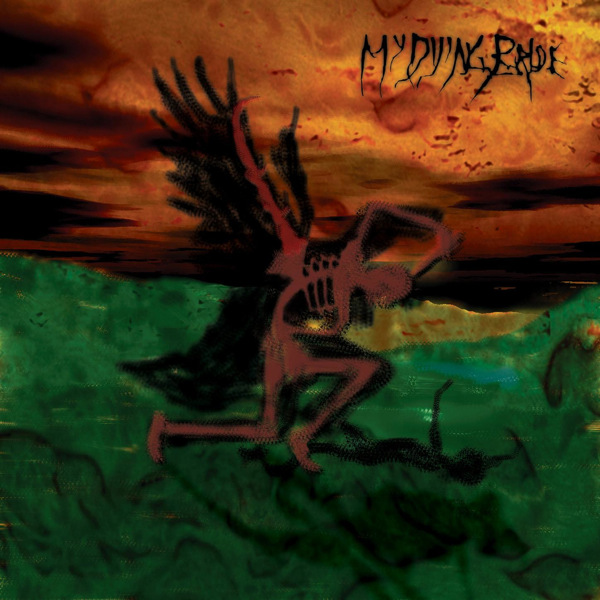
“My Hope, the Destroyer” is a part of their 2001 album The Dreadful Hours, and is the culmination of an hour-long soundscape of doom. Metaphor and reality blend interchangeably, and from the opening strings, a scene of such utter bleakness is painted that it blackens the very world around you:

There is a man, eyes red and swollen with many tears, arms out to a soul that is not there. In a room, dimly lit, he feels himself drawn ever deeper into a corner of blackness, and the world above fades into utter nothingness. So has he been for days, and now he has not the strength to crawl of the unlit void into which he has been carried away. Voices pass around and over him, and they are distant, unheard and meaningless. Their sound is cold, and bring no comfort.

As this man is ever drawn down a stream of unconscious and black, twisted claws of despair rise from the deep, and he comes to pieces, and is undone. In this dying, he sees his woman, in white on a ground of black stone, stained in red, and the bleak faces of people and demons gather and stare. He is there, again, and in his arms she is lifeless. In the rain, the gray and the red above, the twisted faces of the past stare down, and mock him.

He is carried away on the sea of ink, and there is a stone, upon it a word, and below it a death. The tree above is leafless, and the raven does not move. Water drips on the stone, and it is not rain.

And in the fading twilight of his life, his every thought has ever been bent upon this moment, and turning back on a life of many years, all hope failed that one night, and tears have filled all the nights since.

Such are the scenes in my mind, every time I hear this song, and I am given to wonder – what tragedies inspired music of such despair?